In
our ancient India (Gurukul tradition), teaching was not seen as a job/work but
a Yajña (sacrifice)—an offering of knowledge for the
betterment of the society and world. In this way, it is logical to say that all professions stem from education; the teacher is the origin. Teaching connects with Jnana Yoga—the
path of knowledge. Unlike other professions, its highest success is liberation,
not wealth. Mainly, it has
societal aim and non-material goal.
“In my personal opinion, I believe
that one should never compare education with a field like business world where
wealth creation or profit maximization might be key agenda. Education may be
considered as a field of charity, donation or even contributing for generations
to come.” -{ Dr. Abhishek Kumar
Pandey }
So this is obvious fact that factors
which influence this system must have four key considerations: Teacher, Students,
Facilitators and Social stakeholders (parents, corporate, government etc.).
Teaching is a noble /distinct field
because teachers ( Gurus ) always thing about society and its key challenges
and it is a normal imperatives that any social problems can be resolved fully
with increasing the standard of education or working on value based education (
As central theme of Our Ancient Indian education System) .
The profession of teaching is unique because it transforms
the inner world of a student, not just the outer. In Sanskrit Shloka the
same has been enshrined as :-
गुकारस्त्वन्धकारः स्यात् रुकारस्तेज उच्यते।
अन्धकारनिरोधित्वात् गुरुरित्यभिधीयते॥
Further, "Gu" denotes the darkness and "Ru" refers to the eliminator of darkness. Hence, Guru
is one who removes the darkness of ignorance.
While concluding this blog post, I raise few considerations for the policy makers, key decision makers in our Education system that
1. Whether it is right to compare this profession with
other professions where pay and power is only central agenda?
2. Why society and its key stakeholders not give much respect to our teachers as prevalent in our ancient India and now commonly traced in
European and American Society?
3. Why central, state government and other competent management authorities do not think about welfare of teachers and staff who are working
selfless in education sector?
4. Why there is a huge gap of pay, compensation, benefits and social security to teachers and staff working in private sector as compared to
Public sector institutions?
In my view, education is again a
weapon against social illness so any investment on education means securing the
future of India and securing the several generations to come.
In spite several challenges, a true
teacher will never come ahead to get credit of any achievement to the
institution level, social level and even to any level. But, many indirect
contributions of our great teachers make this profession distinct, valuable one
and respectful than others. Even, academic policy decisions can only be
logically felt, discussed and taken by our true academicians. Even, great
educational reforms need to be initiated by every stakeholder to safe our
future in the age of technology.
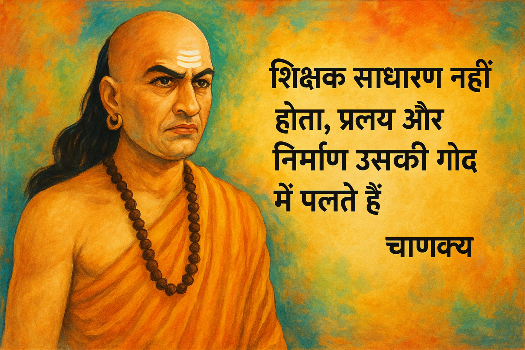
I want to remind about a prominent
quote of great Aacharya Chankya , which signifies the role of a teacher in
nation building.
"शिक्षक कभी साधारण नहीं होता, प्रलय और निर्माण उसकी गोद में पलते हैं।”
-आचार्य चाणक्य