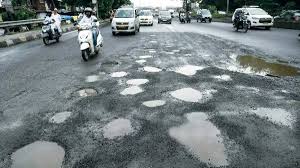
Despite
having similar design standards, Indian roads often suffer from early
deterioration much more than many roads internationally. The underlying causes
stem from a complicated combination of issues related to materials, inadequate
drainage, excessive traffic loads, construction defects, and severe weather
conditions. To understand these interactions, an engineering perspective that
goes beyond the common notion that "the contractor did a bad job" is
essential. Key engineering principles involve misalignments in structural
design, pavement-subgrade interactions, susceptibility to moisture, and stress
concentrations caused by axle overloads and repeated thermal fluctuations,
although the quality of workmanship is certainly an important factor.
Inadequate
control over axle loads is one of the main technical causes of early pavement
failure in India. Field conditions frequently reveal trucks carrying much
larger loads than allowed, even though road designs adhere to IRC standards
assuming legal axle limits. In terms of equivalent standard axle (ESAL) counts,
overloaded axles produce stress repetitions that are significantly higher than
the anticipated design traffic. Even a 20–30% overloading can reduce pavement
life to less than half of its intended design period because the fatigue life
of flexible pavements decreases exponentially with increased axle load. Daily
overstressing results in bituminous layer densification, quick wheel path
rutting, and even subgrade shear failure.
Another
important factor in early road distress is construction quality. For pavements
to work as intended, each layer needs to have a certain strength, degree of
compaction, and thickness. In actuality, poor temperature control during
bitumen mixing and laying causes incorrect coating, segregation, or low density
in the bituminous layer, while insufficient compaction of subgrade or granular
layers causes differential settlement. Any decrease in field density increases
fatigue cracking, decreases stiffness, and encourages water infiltration.
Contractors may use untested material, reduce thickness, or skip layers in
rural or low-supervision projects, resulting in weak spots that appear early in
the pavement's life.
In
India, drainage is still one of the most underappreciated factors affecting
road performance. Many Indian roads have poor longitudinal slopes, clogged side
drains, or no subsurface drainage at all, in contrast to nations with
well-organized pavement drainage systems. Loss of load-carrying capacity
results from water entering the pavement system, which lowers the modulus of
the subgrade and granular base. The resilient modulus drastically decreases
when the base course gets saturated, which results in bitumen stripping,
rutting, and potholes because bitumen and aggregates no longer adhere to one
another. This issue is made worse by heavy monsoon events because pavements are
left wet for long stretches of time, something that is rarely fully considered
in the design.
An
additional significant level of stress is introduced by the climate. Summertime
and wintertime temperatures on Indian roads vary greatly; in hot areas, surface
temperatures can easily reach 60–70°C. Bitumen softens at high temperatures,
decreasing its viscosity and increasing the pavement's vulnerability to rutting
under heavy traffic. On the other hand, the hardened bitumen becomes brittle
and promotes cracking during winter or nighttime cooling. Over the course of
the pavement's life, these thermal cycles—which are repeated thousands of
times—promote fatigue and spread microcracks, particularly when the binder
grade is chosen improperly for the climate zone of the area. When a
performance-grade or polymer-modified binder is needed, many failures occur
simply because a softer bitumen grade is utilized.
Another
important but frequently disregarded factor is the subgrade's behaviour.
Expansive clays or weak silty soils that experience swelling, shrinking, and
moisture fluctuations are the foundation of many Indian roads. Pumping,
heaving, and localized depressions occur when the subgrade is unstable or
improperly drained. Even well-built bituminous layers will crack, deform, and
create potholes once the structural support is compromised. On roads where the
subgrade's CBR is overestimated or where seasonal variations result in
significant changes in bearing capacity, the issue gets worse.
Maintenance
practices also play an important role in determining the outcome. Sealing,
filling of cracks, and renewal of the surface are common periodic requirements
for roads. The perception that early maintenance intervention is not required
for a new road result in delayed interventions. Small cracks are sufficient for
water penetration, which evolves into potholes in the monsoon season. Deep
structural damage may be required if initial surface failures are not treated
promptly. This entails costly rehabilitation. Inadequate routine and preventive
maintenance, therefore, turns manageable distress into structural failure.
Through
all these factors interacting, deterioration is hastened. Poor construction
creates weaknesses; monsoon moisture worsens them; overloaded trucks deepen the
damage; temperature cycles initiate cracking; and absence of maintenance allows
distress to escalate. The cumulative effect is an early failure even when the
road is only three to five years into a ten-year design life. Sustainable road
performance in India indeed calls for a systems approach that integrates strict
enforcement of axle-load laws, quality control in construction, region-specific
material selection, efficient drainage systems, and scientific maintenance
planning.