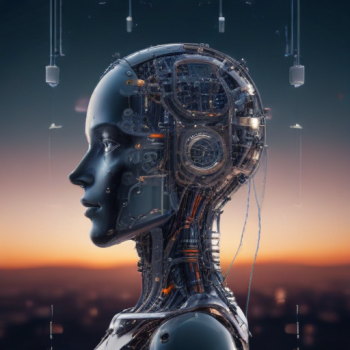
In the world of Artificial Intelligence (AI), where
computers can do smart things like recognize faces or play games, electronics
is like the magic behind the scenes. Let’s break down why knowing about
electronics is super important when we're learning about AI
1. Hardware Infrastructure: At the heart of every AI system lies a robust hardware
infrastructure. From data centers housing powerful servers to edge devices
processing data in real-time, electronic components form the backbone of AI
computing. Understanding the architecture, design, and operation of these
electronic systems is essential for optimizing AI algorithms and achieving peak
performance
2. Sensing the world: AI needs to know what's happening around it, like
seeing and hearing. Electronics help by using sensors, which are like AI's eyes
and ears. Knowing about electronics helps us make these sensors work accurately
3. Signal Processing:
Raw data captured by sensors often requires preprocessing before it can be fed
into AI algorithms. Signal processing techniques, such as filtering, noise
reduction, and feature extraction, are indispensable for extracting meaningful
information from sensor data. Electronics expertise is essential for
implementing these signal processing algorithms efficiently and ensuring
optimal data quality for AI analysis.
4. Embedded System:
Many AI applications demand real-time decision-making in resource-constrained
environments, such as autonomous vehicles, wearable devices, and industrial
robots. Embedded systems, comprising microcontrollers, sensors, and actuators,
provide the computational power and connectivity required to deploy AI
algorithms at the edge. Electronics engineers proficient in embedded systems
design can leverage AI to create intelligent and responsive devices that
enhance efficiency and autonomy.
5. Saving Energy: AI
can be hungry for power, meaning it needs a lot of electricity to work. But
with smart electronics, we can make AI devices that don’t need so much power.
This helps in making gadgets that last longer and are better for the
environment.
6. Exciting New
Stuff: Electronics and AI are teaming up to create amazing new things like
computers that work like human brains or super-fast computers that can solve
big problems. Understanding electronics helps us be part of these exciting
developments. By mastering the principles of electronics, students can unlock
new frontiers in AI research and development.
In simple terms, electronics is like the superhero sidekick
to AI, making sure it can do its job well and helping to create awesome new
inventions. So, if you're into AI, knowing a bit about electronics is like
having a secret weapon in your toolkit!.
Ritu
Singh
Head
of Department (ECE)