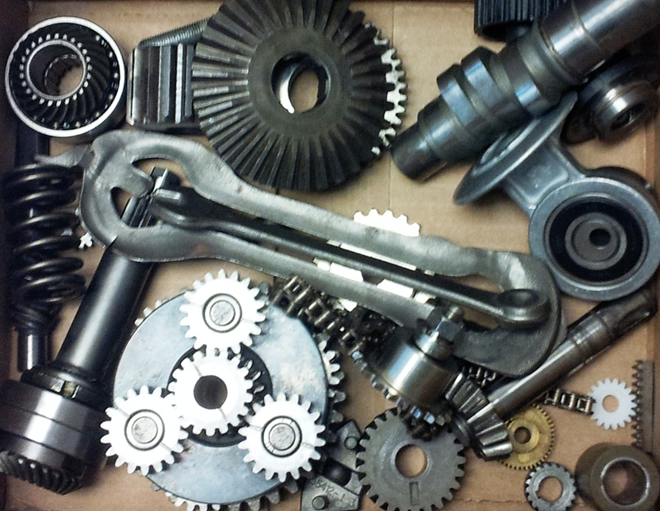
Introduction
Robotics and Automation is an essential
domain in mechanical engineering that significantly influences numerous
industries. Engineers working in this field focus on the design, evaluation,
and enhancement of systems based on fundamental scientific laws. From
automotive and aerospace to energy and manufacturing sectors, Robotics and
Automation plays a critical role. This document outlines core concepts,
industrial applications, real-life case studies, recent advancements, and
emerging trends in the field.
Fundamental Concepts
- Core Scientific Laws: Robotics and
Automation is grounded in foundational principles such as Newton’s laws,
thermodynamics, fluid flow, and properties of materials. These concepts
assist engineers in building reliable and high-performing mechanical
systems.
- Mathematical Frameworks: Engineers
use detailed mathematical models to foresee how systems behave and to
improve their effectiveness. Such models are vital for processes like
finite element analysis, computational fluid dynamics, and optimization
techniques.
- Technological Integration:
Breakthroughs in tools like simulation platforms, artificial intelligence,
and automation have reshaped the approach to Robotics and Automation,
enabling improved accuracy and performance.
Applications in Industry
- Automotive Sector: Robotics and
Automation supports the development of safer, more efficient vehicles. It
helps enhance aerodynamics, select optimal materials, and improve
powertrain mechanisms.
- Aerospace Sector: The aerospace
industry employs Robotics and Automation for aircraft structure design,
propulsion mechanisms, and durability. Engineers assess thermal loads,
fatigue, and mechanical stress.
- Energy Sector: Applications include
the development of clean energy systems, optimization of power generation,
and energy storage methods—especially in wind and solar technologies.
- Manufacturing: High-precision
engineering and robotics drive automation in production lines. These tools
enhance product quality, increase efficiency, and reduce manufacturing
costs.
Case Studies and Real-World Examples
- Innovative Systems: Engineers
incorporate Robotics and Automation to build advanced systems like smart
manufacturing units, next-gen electric vehicles, and efficient
powertrains.
- Failure Investigations: Past
mechanical breakdowns help in designing safer, more robust systems.
Studies often focus on material stress, fatigue failures, and thermal
issues.
- Sustainable Engineering: Increasing
environmental responsibility pushes engineers to adopt green methods—such
as using lightweight materials, increasing energy conservation, and
adopting eco-friendly technologies.
Advancements and Future Trends
- Smart Materials: Adaptive and
self-healing materials are redefining engineering practices in Robotics
and Automation. These enhance functionality by adjusting properties based
on surroundings.
- AI and Machine Learning: These
technologies are increasingly used for optimizing design, predicting
maintenance needs, and improving system efficiency. They allow faster and
more accurate simulations.
- Green Technologies: Environmental
sustainability is driving innovation. Robotics and Automation aids in
designing machines with lower emissions, better energy performance, and
renewable energy compatibility.
Challenges in Robotics and Automation
While the field continues to evolve,
challenges remain—such as the limited availability of high-performance
materials, the cost of advanced technologies, and the complexity of simulation
tools. Researchers are working on improving digital models, exploring
innovative materials, and finding cost-effective solutions.
Conclusion
Robotics and Automation continues to be a
foundational pillar in mechanical engineering, shaping advancements across
multiple sectors. As new technologies emerge, this field will further transform
industrial processes—enhancing sustainability, efficiency, and innovation. By
combining intelligent systems and eco-conscious design, Robotics and Automation
promises a future full of engineering potential.