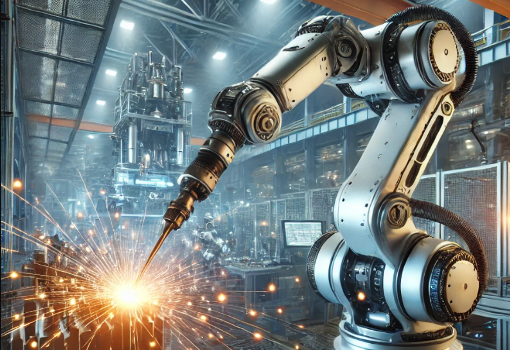
Introduction
Robots have
become a crucial part of modern mechanical engineering, revolutionizing the way
complex tasks are performed in industries such as manufacturing, automotive,
aerospace, and energy production. Mechanical engineering focuses on the design,
analysis, production, and maintenance of mechanical systems, and the
integration of robotics has significantly enhanced the efficiency, accuracy,
and flexibility of these processes. The use of robots in mechanical engineering
has led to greater precision, increased production rates, reduced labor costs,
and improved safety standards. As technology continues to advance, the role of
robots in mechanical engineering is expanding rapidly, driving innovation and
transforming traditional engineering practices.
What Are Robots in Mechanical
Engineering?
Robots used
in mechanical engineering are programmable machines designed to perform a
variety of complex and repetitive tasks with high precision and minimal human
intervention. These robots are equipped with actuators, sensors, controllers,
and end effectors that enable them to carry out mechanical operations such as
welding, machining, assembly, and inspection.
Robots in
mechanical engineering are typically categorized based on their structure and
function, including:
Articulated Robots: These have rotary joints
and resemble a human arm, providing high flexibility and a wide range of
motion.
SCARA Robots: (Selective Compliance Assembly
Robot Arm) Designed for highspeed and precise horizontal movements, often used
for assembly and material handling.
Cartesian Robots: Operate on linear axes (X,
Y, Z) and are used for highprecision tasks such as CNC (Computer Numerical
Control) machining and 3D printing.
Delta Robots: Known for their spiderlike
structure and highspeed operation, used for sorting and packaging.
Collaborative Robots (Cobots): Designed to
work alongside human operators in a shared workspace, enhancing productivity
and safety.
Applications of Robots in Mechanical
Engineering
The use of
robots in mechanical engineering spans a wide range of industrial and
production processes. Their versatility allows them to perform complex tasks
with high accuracy and repeatability.
1. Manufacturing and Production
Manufacturing
is one of the primary areas where robots are extensively used. Robots are
employed to perform:
Machining: CNC machines equipped with robotic
arms can cut, drill, and shape materials with high precision.
Welding: Robotic welding systems are capable
of performing spot welding and arc welding with consistent quality and minimal
error.
Material Handling: Robots transport, position,
and manipulate materials on production lines, improving efficiency.
Assembly: Robots assemble complex mechanical
components with high accuracy, reducing production time and costs.
2. Automotive Industry
The
automotive sector has been one of the earliest adopters of robotic systems.
Robots are used for:
Body Assembly: Robots weld, paint, and
assemble car bodies with high accuracy and repeatability.
Engine Manufacturing: Robots handle precision
machining, component installation, and quality inspection of engine parts.
Painting and Coating: Automated robotic
systems ensure consistent application of paint and coatings, reducing waste and
improving quality.
3. Aerospace Industry
Robots play
a critical role in the aerospace sector due to the high precision and safety
requirements:
Composite Material Handling: Robots accurately
lay up composite materials for aircraft manufacturing.
Riveting and Fastening: Automated systems
ensure consistent placement of fasteners and rivets in aircraft
structures.
Inspection: Visionbased robots perform nondestructive
testing (NDT) to identify defects in aircraft components.
4. Energy and Power Generation
Robots are
used in energy production and power plants for maintenance, inspection, and
repair:
Wind Turbine Maintenance: Robots inspect and
repair blades and other components of wind turbines.
Nuclear Power Plants: Robots handle hazardous
materials and perform maintenance in radioactive environments, reducing human
exposure to radiation.
Oil and Gas: Robots are used for pipeline
inspection, underwater repairs, and maintenance of offshore rigs.
5. 3D
Printing and Additive Manufacturing
Robotic
systems are widely used in additive manufacturing processes:
Metal and Polymer Printing: Robots equipped
with extruders or lasers can create complex parts layer by layer.
Customization: Robots enable the production of
customized components at a low cost.
Prototyping: Rapid prototyping using robotic
3D printing accelerates product development cycles.
6. Maintenance and Repair
Robots are
employed for predictive maintenance and automated repair tasks:
Inspection: Robots equipped with cameras and
sensors can inspect machinery for wear and tear.
Laser Cladding: Robots can repair worn
components using laser cladding techniques.
Lubrication and Cleaning: Automated systems
handle lubrication and cleaning of mechanical systems, improving lifespan and
performance.
Advantages of Using Robots in Mechanical Engineering
The
integration of robots in mechanical engineering provides several key benefits:
✅ Increased Precision and Accuracy: Robots eliminate human error,
ensuring consistent quality and precision.
✅ Higher Production Rates: Robots operate continuously without
fatigue, increasing production capacity.
✅ Cost Reduction: Automation reduces labor costs and material
wastage, improving overall profitability.
✅ Enhanced Safety: Robots perform dangerous tasks in hazardous
environments, protecting human workers from injury.
✅ Flexibility and Adaptability: Modern robots can be reprogrammed
for different tasks, enhancing operational flexibility.
✅ Improved Product Quality: Robots ensure uniformity in product
dimensions and finishes.
Challenges and Limitations
Despite
their numerous advantages, robots in mechanical engineering face certain
challenges:
🔴 High
Initial Investment: The cost of installing and integrating robotic systems can
be significant.
🔴 Programming
Complexity: Skilled personnel are required to program and maintain robots
effectively.
🔴 Maintenance
and Downtime: Robots require regular maintenance to prevent breakdowns and
ensure optimal performance.
🔴 Job
Displacement: Automation can lead to job loss in certain sectors, raising
concerns about workforce adaptation.
Future Trends in Robotics for Mechanical
Engineering
The future
of robotics in mechanical engineering is shaped by advancements in artificial
intelligence (AI), machine learning, and automation:
AI and Machine Learning: Robots are becoming
more intelligent, capable of learning from data and improving performance over
time.
Collaborative Robots (Cobots): Increased use
of cobots that work alongside human operators in shared workspaces.
Digital Twin Technology: Virtual models of
robotic systems will enable realtime monitoring and simulation of
operations.
Autonomous Robots: Selfoperating robots will
enhance manufacturing flexibility and efficiency.
Adaptive Manufacturing: Robots will adjust
their processes based on realtime data, improving responsiveness and quality
control.