In
an age dominated by rapid technological advancement, economic pursuits, and
individual ambitions, the foundation of ethical and moral character often gets
overlooked. Yet, Indian philosophical thought has always asserted that character
is the true wealth of an individual. Without it, neither social respect nor
inner peace can be achieved.
The
ancient Indian scripture Manu Smriti offers profound wisdom for personal
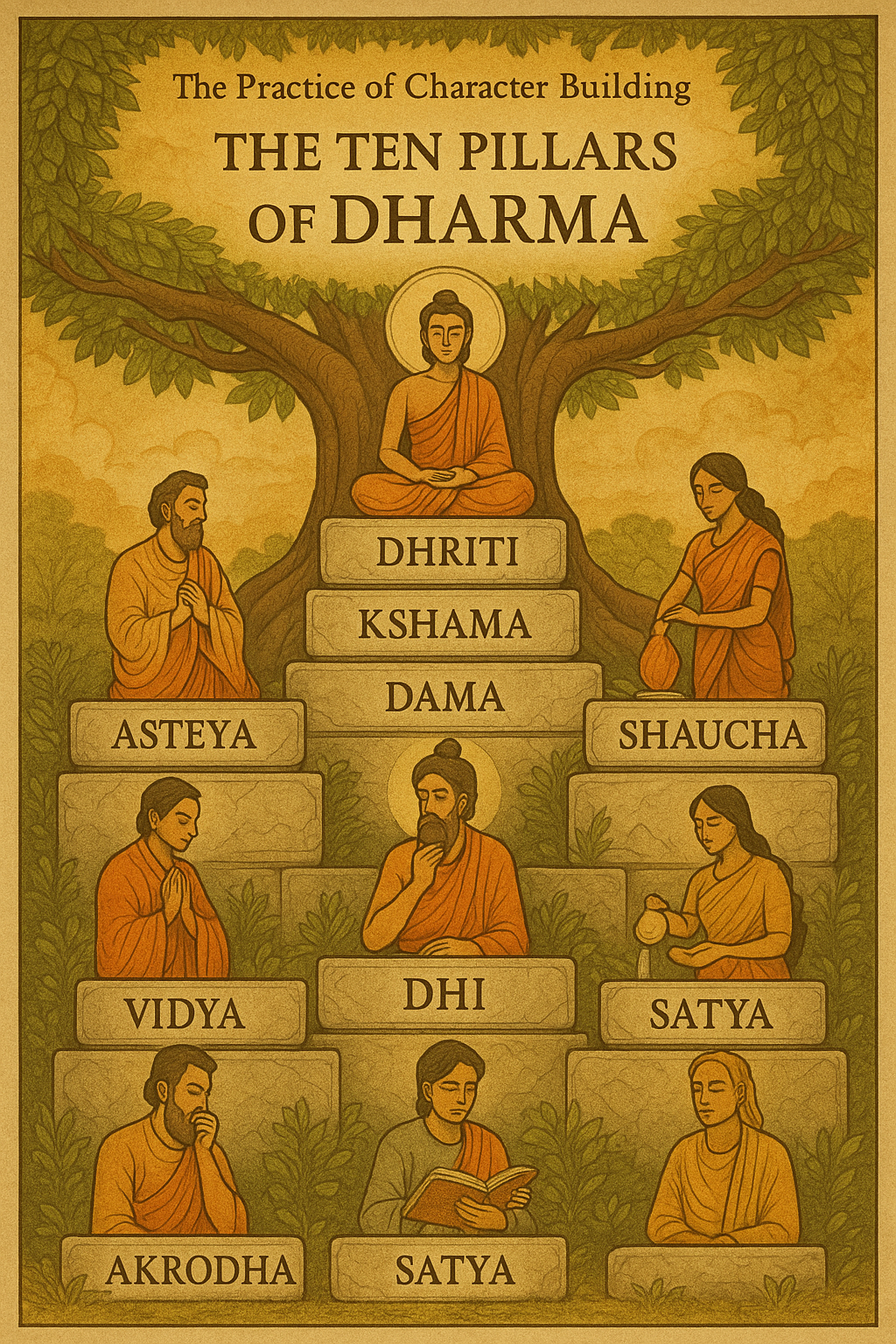
transformation and social harmony through Ten Pillars of Dharma, which
serve as guiding lights in the practice of character building. These teachings
are not only relevant to spiritual seekers but are of immense importance to
today’s students, educators, professionals, and leaders.
Why Character Matters
A verse in Sanskrit
beautifully captures the essence of a virtuous personality:
“अष्टौ
गुणा पुरुषं
दीपयन्ति प्रज्ञा सुशीलत्वदमौ श्रुतं
च ।
पराक्रमश्चाबहुभाषिता च
दानं यथाशक्ति कृतज्ञता च
॥”
Eight
qualities adorn a man — intellect, integrity, self-control, knowledge, valor,
controlled speech, charity, and gratitude.
Virtue
is like a lamp that radiates a person’s inner strength. One who possesses these
qualities becomes dignified and inspiring in the eyes of society. The wise
recognize virtue, just as the cuckoo recognizes spring, while the ignorant fail
to appreciate it — a poetic reflection of the reality that good character often
goes unnoticed until it is needed most.
The
Ten Pillars of Dharma
As
described in Manu Smriti (6.92), these ten attributes are essential
markers of Dharma — righteous living. Each virtue acts as a pillar that upholds
the edifice of an upright and balanced personality.
1.
Dhṛiti
(Steadfastness/Patience)
Remaining calm and composed
in the face of difficulties reflects true strength. It nurtures perseverance
and mental endurance necessary to face life’s adversities.
2.
Kṣhamā (Forgiveness)
The willingness to forgive is
a sign of maturity and spiritual strength. It fosters peaceful coexistence and
dissolves bitterness in relationships.
3.
Dama (Self-Control)
Mastery over desires, emotions,
and impulses is vital for inner discipline. Self-restraint ensures alignment
between thought and action.
4.
Asteya (Non-stealing)
More than the act of not
stealing, Asteya represents honesty in thought, intention, and conduct. It
promotes trustworthiness in social and professional life.
5.
Shaucha (Purity)
Purity is not limited to
physical cleanliness; it includes purity of thoughts, speech, and intent. It
shapes noble conduct and spiritual clarity.
6.
Indriya-Nigraha
(Control of Senses)
Unchecked sensory desires are
often the root of distraction. Regulating one’s senses cultivates clarity,
focus, and the pursuit of higher goals.
7.
Dhi (Intellect)
The ability to discern
between right and wrong is the cornerstone of wise decision-making. A sattvic
intellect leads to clarity and elevated action.
8.
Vidya (Knowledge)
True knowledge is not merely
informational but transformational. It enables one to live meaningfully, with
awareness and purpose.
9.
Satya (Truthfulness)
Truth spoken with humility
and responsibility is the foundation of trust. It brings coherence between
words, thoughts, and deeds.
10. Akrodha (Absence of Anger)
Anger clouds judgment and
fractures relationships. Cultivating calmness and equanimity ensures personal
peace and collective harmony.
Living Dharma in the Modern
World
These
ten virtues are not just lofty ideals but practical tools for daily
living. Practicing them — at home, at work, or within educational institutions
— helps individuals grow holistically and contributes to the development of an
ethical and spiritually awakened society.
The
ancient sages of Bharat emphasized not only the accumulation of knowledge but
also the cultivation of character (शीलम्), which they described as the “supreme ornament.” For
them, character was the true indicator of leadership, success, and social
contribution.
Reclaiming India’s Spiritual
Legacy
The
vision of Spiritual Bharat lies in reawakening these timeless values. As
an academic institution, we are committed to inculcating these principles in
our students through holistic education that emphasizes not only competence but
also conscience and compassion.
Incorporating
the Ten Pillars of Dharma into our character-building practices will enable the
youth of India to emerge as capable, ethical, and enlightened leaders,
aligned with the spirit of our civilization’s wisdom.
Let
us walk the path of Dharma, not merely as a philosophical idea, but as a lived
reality — one decision, one action, and one virtue at a time.