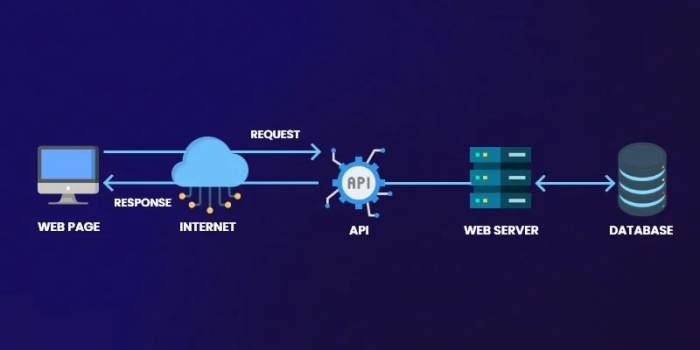
An
API is a set of tools that can use to develop software applications. In simpler
terms, an API is a set of instructions that allow different software
applications to communicate and interact with each other.
APIs
are used extensively in modern software development, especially in web and
mobile applications. They provide a way for developers to access data and
services from other applications or platforms, enabling them to build more
powerful and feature-rich applications.
Each
type of API has its own set of protocols and specifications that determine how
applications can interact with it. The various types of APIs such as:
v Web
APIs
v Operating
system APIs
v Database
APIs.
Web APIs
are perhaps the most common type of API, and they are used extensively in web
and mobile application development. A web API allows one web application to
communicate with another application over the internet.
For example,
you're building a mobile app that allows users to search for and book flights.
You might use a web API provided by an airline to access their flight schedules
and pricing data. This API would allow your application to retrieve the
information it needs to display available flights and prices to your users.
Operating system APIs
are another common type of API, and they are used by software developers to
access the features and functionality of an operating system. For example, an operating system API
might allow a developer to access a device's camera or microphone, or to
interact with its file system.
Database APIs
allow software developers to interact with a database management system, such
as MySQL or PostgreSQL. These APIs provide a way for developers to read and
write data to and from a database, making it possible to build applications
that rely on persistent data storage.
APIs
can be accessed in a variety of ways, depending on the type of API and the
programming language being used. Web APIs are often accessed using HTTP
requests, while operating system and database APIs may be accessed through more
specialized libraries and frameworks.
Features of API
v It
offers a valuable services (data, function, audience)
v It
helps you to plan a business model.
v Simple,
flexible and quickly adopted.
v Managed
and measured
v Offers
great developer support
Key benefits of using
APIs
v In
software development is that they allow developers to leverage the capabilities
of other applications and platforms without having to build everything from
scratch.
v To
save the time and effort.
v It
can enable developers to build more powerful and sophisticated applications
v Offer
a uniform way for different application to communicate with each one. This
means that developers can use APIs from various providers without having to
learn a completely new set of protocols and specifications for each one.
Potential drawbacks to
using APIs.
v APIs
can be subject to change, which can create compatibility issues for
applications.
v APIs
can be subject to rate limits or other usage restrictions, which can impact the
performance and functionality of applications that use them.
Conclusion:
APIs
are an necessary module of current software development. They provide a way for
developers to build more powerful and sophisticated applications, and enable
different applications and platforms to communicate and interact with each
other. While there are some potential drawbacks to using APIs, the benefits
they provide make them an indispensable tool for software developers.