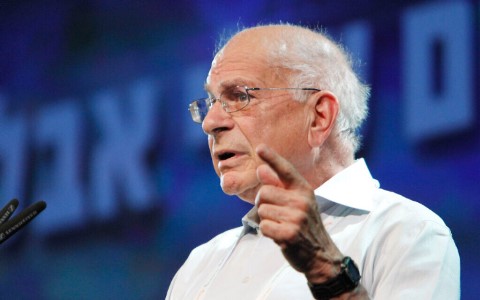
Daniel
Kahneman died on March 27, at the age of 90; he was a psychologist at
Princeton University and winner of the Nobel Prize in economics in 2002
Kahneman’s
greatest contribution to this world came in the form of his research in the
field of Behavioural Economics in which
he did a pioneering work along with his research partner, Amos Tversky, who
died in 1996. Kahneman was best known for a huge
bestseller he co-authored with Jason Zweig named “Thinking, Fast
and Slow.”
Prior to his research, ever since Enlightenment it was assumed that man thinks rationally and takes his decisions logically, however through his work it was established that humans do not make rational or unbiased decisions and man’s preferences are not consistent.
The main plank of his book is that people apply two
separate means of decision making: one is Emotional and spontaneous; and the
second is a more deliberate and slow, driven by our rationality. This is loaded
with our previous biases and experiences which deeply influence our buying
behaviour.
He
explained risk in terms of money lost, for instance we feel more pain at
loosing Rs. 100; than the pleasure we experience after gaining Rs.100. People
are more likely to invest in a company which has 80% chance of success than
they would in a company which has 20% chance of failure.