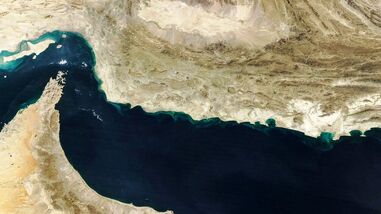
Even
those who had never heard of the Strait of Hormuz must have become familiar
with it’s name by now, the strait
attracts a worldwide keen attention and has been doing so since the war
escalated in the Gulf region, and the minnow in the contest-Iran decided to
play a trump card by blocking the strait of Hormuz paralyzing the world economy
overnight. Strait of Hormuz is approx 33 KM wide and is widely considered a
critical piece of narrow waterways to help transit some of the most crucial
parts of commodity between Gulf and other parts of the geography. It would be
cliché to state that the closing of strait pushed the world into energy crises.
As
with each crises or destruction this current impasse has also badly hit the
nations where the energy demand is high and the supply depended on that narrow
waterways. The strait was the pathway to around 20 Million barrels of oil being
transported daily to different locations in the world, representing nearly 20%
of the global petroleum liquids consumption, about 25% of the world’s seaborne
oil trade passing through in 2025 to the major Asian economies including China,
Japan, India, South Korea etc. Approximately 20% of global LNG trade depended
on this route.
The
Trigger
The
lingering crisis was triggered in Feb 2026 with the conflict in the Gulf
drawing out the intervention of United States of America in support of Israel.
Entrapped in a daunting aerial attack by the combined forces of Israel and
United States, Iran responded sharply by closing the Strait of Hormuz to all
foreign shipping with a strict warning of an impending attack and destruction
in case any ship dared to cross the water body. Iran intended to impose a levy
on all Tankers crossing the strait under the protection of Iran’s naval forces.
The ensuing chaos led to steep rise in oil prices as oil surged past $100 per
barrel hitting the oil and gas supplies and prices all over the world.
Economic
Fallout
The ripple effect hit the
global markets badly destabilizing energy sector in particular and other
supplies such as fertilizers and chemicals in general. The hit to the global
trade and economy has been immense with global GDP growth rated to slide down
by 2.9% points in the second quarter of 2026. The shock waves are as much felt
in the gulf region as they are worldwide notably the Gulf States are losing
about $1.1 billion per day in oil revenue, since the ships are sitting idle and
not able to move towards their destinations.
Beyond
energy, the disruption hit trade in metals like steel and aluminium products,
and agricultural exports such as saffron, dates, and pistachios, goods vital to
infrastructure and food security in Africa and South Asia. The UN
Secretary-General warned the crisis could push tens of millions into poverty,
trigger a surge in global hunger, and tip the world toward recession.
There
have been several attempts by the Trump government to make Iran come to the
table for the ceasefire; however repeated attempts have failed due to the
intractability of any agreement between Israel and Iran over the questions of
Hezbollah and Lebanon plunging the world in deep energy crisis.
The
Broader Lesson
Analysts
note that even if the ceasefire holds, transit fees, sea mines, billions in
infrastructure damage, and deep regional mistrust pose serious obstacles to a
genuine recovery. The episode has underscored how a very determined Iran has
withstood the threat to its sovereignty from the most powerful nation in the
world, needless to add with all the overt and covert support from Russia and
China and moral support of the world powers who did not swing in favour of
American attack on Iran, reiterating the classic tale of David and
Goliath.