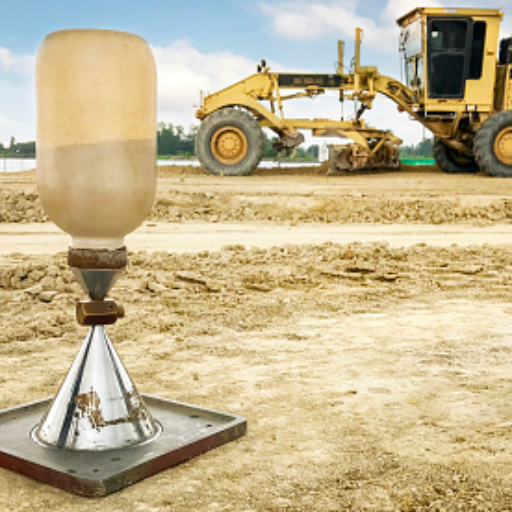
In civil engineering, the stability of a structure is only as satisfactory as the ground it stands on.
Whether you're building a towering skyscraper or a simple residential home, understanding the
soil beneath is critical. This is where soil testing comes into play — an essential step in the
planning and design phase of any construction project.
Why Soil Testing Is Important
1. Foundation Design: Every structure needs a solid foundation, and soil testing helps determine the type of foundation required. Different soils have different load-bearing capacities. For example, clay may contract and bloat, while sandy soil may lack cohesion.
2. Safety Assurance: Inadequate knowledge of soil conditions can lead to foundation failure, cracks, or even total collapse.
3. Cost Efficiency: By knowing the soil profile, engineers can avoid overdesigning or underdesigning foundations. This leads to optimal use of materials and reduces unnecessary costs.
4. Environmental Impact: Soil testing also identifies contaminants and helps assess environmental suitability, which is crucial for both safety and regulatory compliance.
5. Predicting Settlement and Swelling: Testing helps predict such movements and plan accordingly to avoid structural damage over time.
Common Soil Testing Techniques
There are various soil testing methods depending on the information needed. The most
extensively used techniques are here :
1. Standard Penetration Test (SPT)
Purpose: To measures shear strength of sands.
How it works: A split-barrel sampler is directed into the soil using a hammer, and the required number of blows is noted.
Application: Widely used in foundation design and geotechnical investigations.
2. Cone Penetration Test (CPT)
Purpose: To determine the penetration resistance.
How it works: A cone-shaped probe is pushed into the soil, and resistance is measured continuously.
Application: Deliver more specific and precise soil profiling than SPT.
3. Plate Load Test
Purpose: To detect allowable bearing pressure.
How it works: A steel plate is placed at the foundation level and subjected to gradual loading. Settlement is recorded for each increment.
Application: Used for designing shallow foundations.
4. California Bearing Ratio (CBR) Test
Purpose: For obtaining the strength of subgrade soil for road and pavement construction.
How it works: A piston is used to penetrate the soil sample, and resistance is measured.
Application: Highway and airport pavement design.
5. Atterberg Limits Test
Purpose: Plasticity and moisture content of fine-grained soils are to be calculated.
How it works: Liquid limit, plastic limit, and shrinkage limit tests are performed.
Application: To assist classification of soil types and see behavior under changing moisture conditions.
6. Soil Classification Tests (Grain Size Analysis)
Purpose: Determines particle size distribution.
How it works: Soil is sieved or subjected to hydrometer analysis.
Application: Used for categorizing soil types according to systems like the Unified Soil Classification System (USCS).
In civil engineering, the stability of a structure is only as satisfactory as the ground it stands on. Whether you're building a towering skyscraper or a simple residential home, understanding the soil beneath is critical. This is where soil testing comes into play — an essential step in the planning and design phase of any construction project.
Why Soil Testing Is Important
1. Foundation Design: Every structure needs a solid foundation, and soil testing helps determine the type of foundation required. Different soils have different load-bearing capacities. For example, clay may contract and bloat, while sandy soil may lack cohesion.
2. Safety Assurance: Inadequate knowledge of soil conditions can lead to foundation failure, cracks, or even total collapse.
3. Cost Efficiency: By knowing the soil profile, engineers can avoid overdesigning or underdesigning foundations. This leads to optimal use of materials and reduces unnecessary costs.
4. Environmental Impact: Soil testing also identifies contaminants and helps assess environmental suitability, which is crucial for both safety and regulatory compliance.
5. Predicting Settlement and Swelling: Testing helps predict such movements and plan accordingly to avoid structural damage over time.Common Soil Testing Techniques There are various soil testing methods depending on the information needed. The most extensively used techniques are here :
1. Standard Penetration Test (SPT)
Purpose: To measures shear strength of sands.
How it works: A split-barrel sampler is directed into the soil using a hammer, and the required number of blows is noted.
Application: Widely used in foundation design and geotechnical investigations.
2. Cone Penetration Test (CPT)
Purpose: To determine the penetration resistance.
How it works: A cone-shaped probe is pushed into the soil, and resistance is measured continuously.
Application: Deliver more specific and precise soil profiling than SPT.
3. Plate Load Test
Purpose: To detect allowable bearing pressure.
How it works: A steel plate is placed at the foundation level and subjected to gradual loading. Settlement is recorded for each increment.
Application: Used for designing shallow foundations.
4. California Bearing Ratio (CBR) Test
Purpose: For obtaining the strength of subgrade soil for road and pavement construction.
How it works: A piston is used to penetrate the soil sample, and resistance is measured.
Application: Highway and airport pavement design.
5. Atterberg Limits Test
Purpose: Plasticity and moisture content of fine-grained soils are to be calculated.
How it works: Liquid limit, plastic limit, and shrinkage limit tests are performed.
Application: To assist classification of soil types and see behavior under changing moisture conditions.
6. Soil Classification Tests (Grain Size Analysis)
Purpose: Determines particle size distribution.
How it works: Soil is sieved or subjected to hydrometer analysis.
Application: Used for categorizing soil types according to systems like the Unified Soil Classification System (USCS).
Conclusion
Soil testing is the primary aspect of successful civil engineering projects. Without a comprehensive understanding of the soil's properties, even the most advanced structural designs are at risk. By applying the right testing techniques, engineers ensure not only the safety and durability of the project but also its economic and environmental viability. Before laying the first brick or pouring the first batch of concrete, invest in thorough soil investigation — it’s a small step that makes a big difference.Soil testing is the primary aspect of successful civil engineering projects. Without a comprehensive understanding of the soil's properties, even the most advanced structural designs are at risk. By applying the right testing techniques, engineers ensure not only the safety and
durability of the project but also its economic and environmental viability. Before laying the first brick or pouring the first batch of concrete, invest in thorough soil
investigation — it’s a small step that makes a big difference.