If someone says that now bacteria will help us to get rid of contaminated and poisonous water, it may sound strange but not all bacteria are harmful. Many bacteria are beneficial just like the bacteria in human gut improve digestion etc.
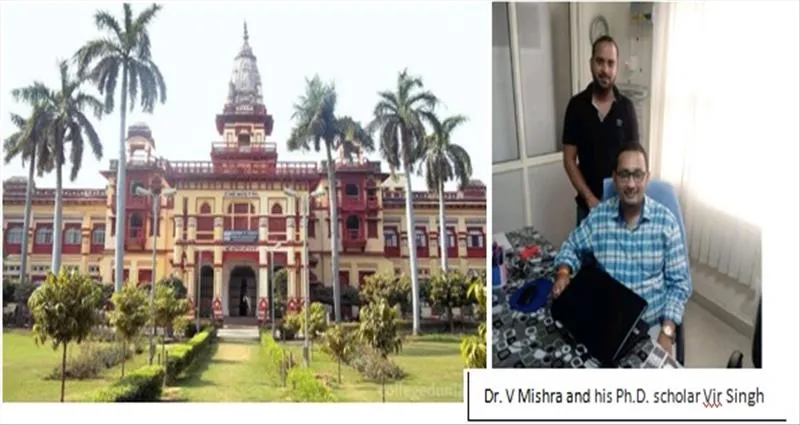
Further development in bacterial benefits was made by a duo; Dr. V. Mishra from the School of Biochemical Engineering, IIT (BHU), Varanasi, and his scholar Mr. Vir Singh, who developed new bacterial strains from the contaminated site which can remove toxic hexavalent chromium from wastewater. Hexavalent chromium is a heavy metal ion responsible for a variety of health problems in humans such as cancer, kidney and liver failure, infertility. This new bacterial strain is able to tolerate large amounts of hexavalent chromium. It is very potent for removing hexavalent chromium from water as compared to the other conventional methods.
How bacteria works - The research disclosed that many heavy metal tolerance mechanisms are activated in bacterial cells when these are grown in a medium containing hexavalent chromium. A rapid growth rate was reported by this bacterial strain in the Chromium (VI) containing aqueous medium and was easily separated from the aqueous medium after the water treatment process. The work has been published in “Journal of Environmental Chemical Engineering” (Impact Factor 5.9, Scopus).
No skilled labor is required to employ to culture the bacterial strain. It is very cost effective, non-toxic, and easy to use. Moreover, post-use separation does not require large energy input and is up to the discharge limit of the Central Pollution control board (CPCB).
Water-borne diseases cause millions of deaths-
It is known that water-borne diseases are the biggest problem in developing countries. According to the World Health Organization (WHO), 3.4 million people, mostly children, die from water-related diseases every year. According to an estimate by the United Nations Children's Fund (UNICEF), 4000 children die every day due to consumption of contaminated water.
The WHO reports that more than 2.6 billion people do not have access to clean water, which is responsible for about 2.2 million deaths annually, of which 1.4 million are children. Global water-borne diseases can be reduced by improving water quality.
A large number of Indian populations drink water with lethal levels of toxic heavy metals. A report by the Ministry of Water Resources said, with nearly 239 million people in 153 districts across 21 states drink water that contains unacceptably high levels of toxic metal ions.
Therefore this research may prove to be a milestone if practiced by governments in water treatment plants.