Proteins
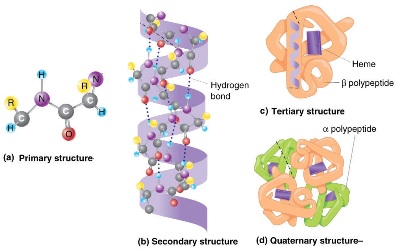
play a vital role in life, serving as essential components that carry out a
wide range of functions in cells and organisms. Their functionality is closely
tied to their three-dimensional (3D) structure, which is defined by the
specific sequence of amino acids they contain. Gaining insights into protein
structures is crucial for progress in areas such as drug development, genetic
modification, and disease management. Traditionally, uncovering these
structures has required labor-intensive experimental techniques, including
X-ray crystallography, nuclear magnetic resonance (NMR) spectroscopy, and
cryo-electron microscopy.
With
the emergence of deep learning, the landscape of protein structure prediction
has undergone a significant transformation. This cutting-edge technology
provides faster, more scalable, and highly accurate methods for predicting
protein structures. In this discussion, we’ll delve into the application of
deep learning in this domain and its profound implications for advancing biological
research.
Why Protein Structure Prediction
Matters
The ability to predict protein structures is invaluable for several reasons:
- Accelerating Drug Development: Understanding protein
structures aids in identifying potential drug targets and designing
molecules that can either inhibit or activate these targets.
- Advancing Genetic Engineering: Structural knowledge is
crucial for creating enzymes and synthetic proteins tailored to specific
functions.
- Improving Disease
Understanding: Detailed insights into protein structures help clarify
how mutations contribute to diseases, paving the way for targeted
therapies.
Despite
its importance, protein structure prediction has long been a complex challenge,
often referred to as the "protein folding problem." This issue
involves deciphering how a chain of amino acids folds into its functional 3D
shape, a process influenced by intricate physical and chemical interactions.
Deep Learning Meets the Protein
Folding Problem
Deep
learning, a branch of machine learning, has emerged as a transformative
approach to solving the protein folding problem. Key contributions include:
- AlphaFold: A groundbreaking tool by
Google DeepMind, AlphaFold predicts protein structures with high accuracy.
It uses neural networks to estimate the spatial relationships between
amino acids in a sequence and converts this data into 3D structures. Key
attributes of AlphaFold:
- End-to-End Training: The model is trained on
protein sequence-structure data, enabling it to recognize complex
patterns.
- Incorporation of Evolutionary
Data:
It utilizes multiple sequence alignments (MSAs) to derive insights from
evolutionary relationships.
- High Precision: AlphaFold achieved
near-experimental accuracy levels in the CASP (Critical Assessment of
protein Structure Prediction) competition.
- Generative Models for Protein
Design:
Techniques such as generative adversarial networks (GANs) and variational
autoencoders (VAEs) facilitate the design of proteins with desired
properties. These models can predict sequences that are likely to form
functional structures, supporting innovations in synthetic biology.
- Sequence-to-Structure
Predictions: Advanced algorithms, including recurrent neural
networks (RNNs) and transformers, have been adapted from natural language
processing to predict structural features directly from amino acid sequences.
These models can determine secondary structures (e.g., helices and sheets)
and anticipate tertiary interactions.
- Structural Refinement: Deep learning models also
improve predicted structures through refinement processes. Techniques like
energy-based models and graph neural networks (GNNs) simulate physical
interactions to enhance prediction accuracy.
Advantages of Deep Learning in
Protein Structure Prediction
- Speed: Predictions can now be
generated in minutes or hours, compared to the weeks or months required by
traditional experimental methods.
- Scalability: With robust computational
resources, deep learning models can process large datasets of protein
sequences.
- Accuracy: Modern models, such as
AlphaFold, deliver results with atomic-level precision, unlocking new
possibilities in research and application.
Challenges and Future Directions
Despite significant advancements, certain challenges persist:
- Data Availability: High-quality structural
datasets are limited for some types of proteins, restricting model
training.
- Generalization: Predicting structures for
novel or highly disordered proteins remains a difficult task.
- Computational Demands: Training and deploying deep
learning models require extensive computational resources.
Future Research Directions:
- Integrating Computational and
Experimental Methods: Combining in silico predictions with experimental
techniques to enhance accuracy.
- Developing Advanced Models: Creating models capable of
handling rare or complex protein structures.
- Real-Time Applications: Designing tools for real-time
predictions to support clinical and industrial applications.
Conclusion
Deep learning has revolutionized protein structure prediction, making it more
efficient and accessible than ever before. Tools like AlphaFold have set new
standards, expanding the horizons of biology and medicine. As this technology
evolves, it holds immense potential for uncovering scientific breakthroughs and
addressing critical challenges in healthcare and biotechnology.