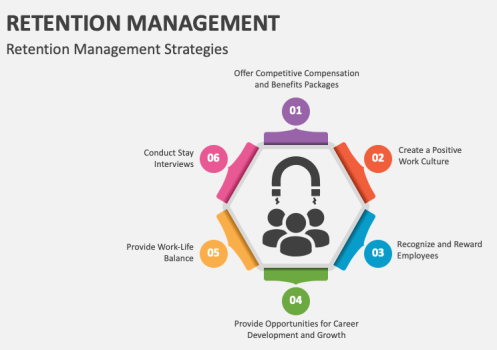
Acquiring and retaining talent is a big challenge for every size business whether it is smaller one or large cap organizations. Retention management is indeed important due to fact that searching candidates again and again is time consuming along with cost incurred activities. Even, many indirect losses and challenges may be faced by organizations when a quality employee leaves the organization. The need of hour is to review, replan and reintervene a successful retention plan which can reduce frequent employee churn due to different reasons. Many times, it has been observed at workplace setting that One of the most significant aspects of the low retention issue is that the top management has a careless attitude, as seen by their failure to implement both monetary and non-monetary incentives in order to keep well performing employees.
Strategies to counter challenges of low retention rate by the organization:
Exit
interview:
Exit interviews are an essential component of the employee leave procedure. Exit interviews are conducted when an employee departs from a company. These interviews offer useful insights into the person's experiences, reasons for leaving, and suggestions for improvement. Employers utilize this feedback to pinpoint areas for improvement in corporate culture, management methodologies, and general employee contentment. Exit interviews can be carried out using many methods such as face-to-face meetings, telephone conversations, or online surveys, to ensure that employees who are leaving feel at ease in expressing their thoughts honestly. There should be two or three senior members in exit interview board.
People leaving the organization should
be offer tailored work options
Customized employee benefits are gaining
popularity as firms acknowledge the varied requirements of their staff. Rather
than providing standardized benefits packages, personalized benefits enable
employees to select solutions that align with their own circumstances and
preferences.
Reducing
toxic work Culture
Alleviating a poisonous work culture
necessitates a comprehensive strategy that tackles both the outward
manifestations and root issues. Implement mechanisms for employees to express
their issues and offer feedback in a confidential manner, if required. Promote
a culture of open and timely communication between management and personnel to
effectively handle any difficulties.
Best Compensation
Package
Determining the
"best" compensation package depends on various factors, such as the
industry, location, company size, and the specific needs and preferences of
employees. However, a comprehensive compensation package typically includes a
combination of monetary and non-monetary benefits tailored to attract and
retain top talent.
Non-monetary
rewards
Non-monetary
rewards are valuable tools for recognizing and motivating employees beyond
financial compensation. Recognition letter, appreciation letters and other
tailored initiatives can help in retaining and motivating employees.
Flexi work
arrangements
Employees have
the flexibility to work from home or another location outside the traditional
office setting. Remote work arrangements can be full-time, part-time, or occasional,
depending on the job requirements and employee preferences. This flexibility
reduces commuting time, promotes work-life balance, and can increase
productivity and job satisfaction. Flexible work hours allow employees to vary
their start and end times within certain parameters, such as core hours when
all employees must be present. Such arrangements are even prominent and
redesign in education sector organization based on nature of work.
Job
Engagement as per desired interest of the employees:
In many organizations,
employees feel burden and boredom due to inefficient job allocations and
employees will more likely to switch or leave the job when they psychologically
feel disengagement. In retaining employees, such factors must be taken care of.