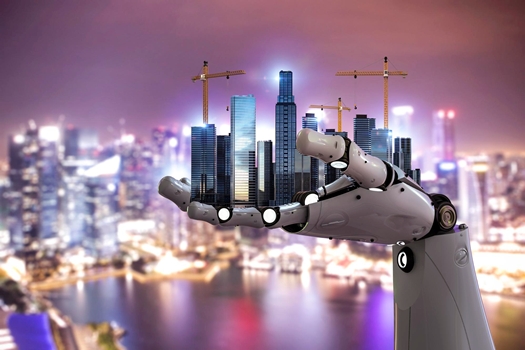
Artificial Intelligence (AI) is no longer limited to futuristic concepts or high-tech industries—it is now making a profound impact on traditional sectors like civil engineering. With rising infrastructure demands and increasing environmental concerns, civil engineers are turning to AI to boost efficiency, safety, sustainability, and innovation throughout the lifecycle of projects.
Predictive Analysis for Safer Structures
One of the most powerful applications of AI in civil engineering is predictive analysis. AI systems can process data from sensors, satellite imagery, historical records, and real-time monitoring tools. In structural health monitoring, for instance, embedded sensors track stress levels, vibrations, and signs of fatigue in materials. AI analyzes this data to detect early warning signs of failure, allowing engineers to intervene before problems escalate—greatly enhancing public safety and reducing long-term maintenance costs.
AI-Enhanced Design and Planning
In the design and planning phases, AI is transforming how engineers approach complex projects. Machine learning algorithms can simulate multiple design scenarios based on structural, environmental, and cost-related constraints. Tools like generative design allow users to input project goals and automatically generate optimized design options. This leads to creative, cost- effective solutions that are often more efficient and sustainable than traditional methods.
Smarter Construction Management
AI is also reshaping on-site construction operations. Robotics and automated machinery are now used for repetitive and high-risk tasks such as bricklaying, welding, and concrete pouring. Drones equipped with AI perform aerial surveys, monitor progress, and ensure alignment with design specifications. These innovations increase accuracy, reduce manual labor, and improve safety on construction sites.
Optimizing Resources in Real Time
AI supports project managers by offering real-time insights into supply chains, weather patterns, equipment usage, and labor efficiency. By this data, AI can estimate delays, recommend resource allocation, and adjust schedules dynamically—ultimately saving time and reducing project costs.
Enabling Sustainable and Smart Infrastructure
In the push toward sustainable development, AI plays a crucial role. It helps optimize energy usage in buildings, recommends low-impact construction materials, and models environmental impact. In urban planning, AI is used to design smart cities by analyzing traffic flow, pollution levels, and population trends. This results in more efficient, livable, and environmentally friendly urban spaces.
Disaster Resilience and Risk Assessment
AI is instrumental in preparing for natural disasters. By evaluating geological, structural, and environmental data, AI can assess the vulnerability of infrastructure to earthquakes, floods, and other extreme events. Engineers use these insights to design disaster-resilient buildings and emergency response strategies.
AI as a Partner, Not a Replacement
While AI significantly enhances capabilities across civil engineering domains, it does not replace human expertise. Engineers bring essential judgment, creativity, and ethical understanding that AI cannot replicate. Instead, AI serves as a powerful partner—amplifying human potential and enabling smarter decision-making.
Conclusion
The integration of Artificial Intelligence into civil engineering marks a new era of innovation and progress. From design and construction to sustainability and risk management, AI is reshaping how infrastructure is built and maintained. As the industry starts to evolve, the collaboration between human intelligence and AI will be vital in building a smarter, safer and more sustainable future.