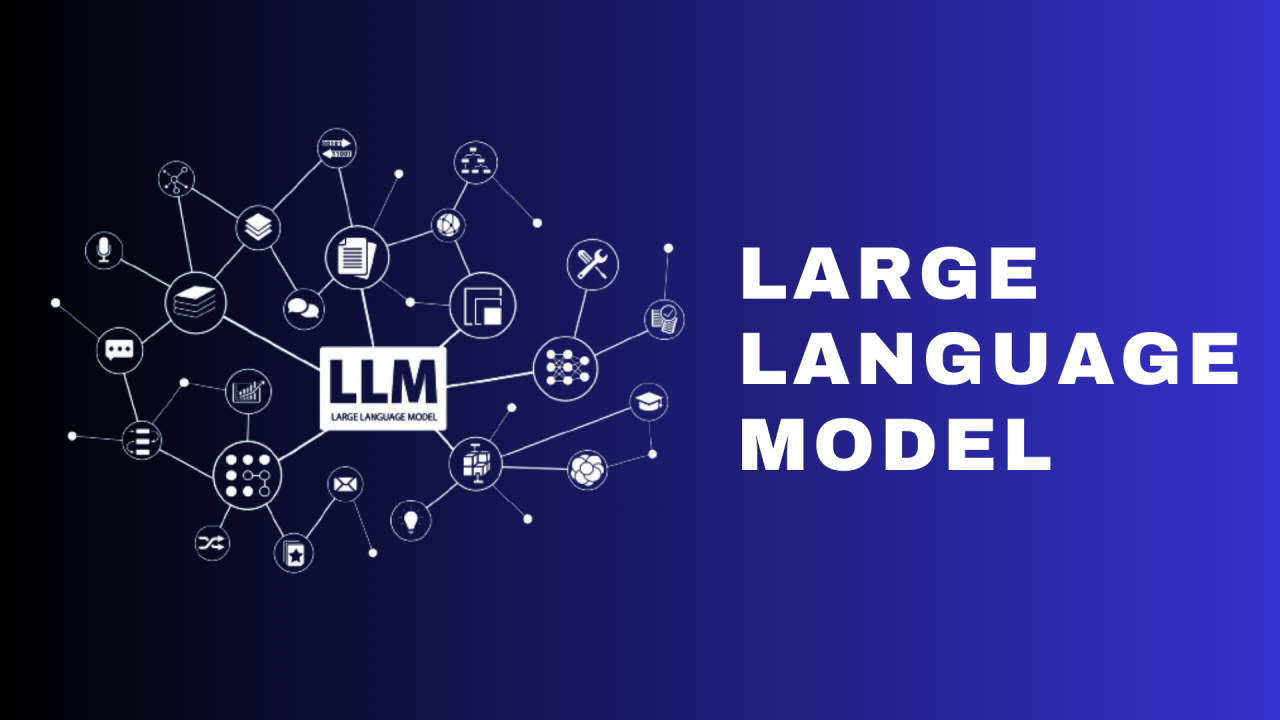
The advancement of artificial intelligence (AI) has bringed a lot of improvement in field of Natural Language Processing (NLP), specially after development of Large Language Models (LLMs). These models has change the way how machines are understand and producing human language, making new chances in many industries and research areas.
What Are Large Language Models?
Large
Language Models are deep learning based models which are trained on big amount
of text data for understand structure, meaning and small details of language.
They are build on transformer architecture, like the one showed in Google’s
paper “Attention is All You Need”. LLMs are learning to predict words based on
context in sentence or paragraph. These models using attention mechanisms for
know which words are more important, and this helps to understand connection
between words even when sentence is long.
Unlike old models that were only made for one task, LLMs are trained generally and later can be fine-tuned or used directly for many kind of NLP tasks without needing much changes. Some common examples of LLMs is OpenAI’s GPT models, Google BERT and PaLM, and also Meta LLaMA model.
Core Applications of LLMs in NLP
1.
Text Generation: One of most useful features of LLMs is they can make fluent
and meaningful text. They can write blog posts, email, or even dialogue for
video games or virtual assistant. LLMs are good in copying human writing style.
This is helping a lot in creative content, advertisement, and even writing
stories.
2.
Machine Translation: LLMs has improved the translation systems a lot. Before, it
was rule-based or statistical method which is not always accurate. But now,
LLMs can understand whole sentence and give more natural and smooth
translation. This is important for businesses and people working in
international communication.
3.
Summarization: Nowadays,
there is too much information everywhere. LLMs can read long articles or
document and give a small summary in easy way. They don’t just pick some lines,
but write again in shorter way. This is useful in media, research, and business
reports.
4.
Sentiment and Emotion Analysis: By checking customer reviews or social media messages, LLMs
can find if people are happy, sad or angry. Some models even understand sarcasm
or humor. Companies are using this for know what people feel about their
product or services.
5.
Conversational Agents and Chat bots: Chatbots now is much more smart
because of LLMs. They understand what user say, reply with good answers, and
can even remember previous questions. This makes the conversation feel more
natural. Chatbots are now using in online customer support, e-learning, and
even medical advice apps.
6.
Question Answering and Search: LLMs can answer questions directly from content or create
new answer based on what they learn. It helps in education, FAQs, and also
legal work. When used in search engine, it can give better and more useful
result.
7. Text Classification and Content Moderation: LLMs help to sort text into different categories, like finding fake news or blocking bad content. Social media websites use it to keep platform safe and follow rules. It saves time and increase accuracy.
Conclusion
Large
Language Models become very important in NLP now. They are strong, can do many
things, and understand language deeply. As they keep improving, we will see
them in more tools and daily life tasks. They will help us to search better, talk
with machine in easier way, and do things faster. LLMs are bringing us to
future where humans and AI can work and communicate together more smoothly.