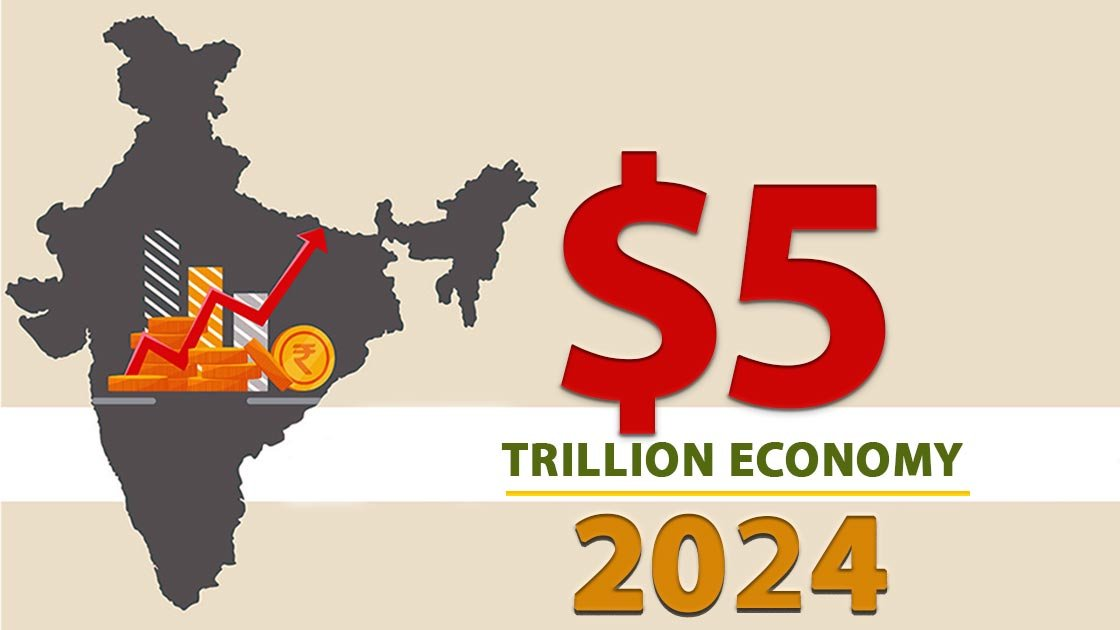
Introduction:
India, a land of vast potential and incredible diversity, has set its sights on becoming a $5 trillion
economy. This ambitious goal has been the subject of extensive discussion, debate, and planning in recent
years. Achieving this milestone would not only solidify India's position as a global economic powerhouse
but also uplift the lives of its billion-plus population. In this blog post, we will explore the challenges and
opportunities that lie ahead on India's path to a $5 trillion economy.
Economic Growth and Infrastructure Development:
One of the key drivers of India's journey to a $5 trillion economy is sustained economic growth. The
government has introduced several measures to stimulate economic expansion, such as tax reforms, ease-of-doing-business initiatives, and infrastructure development projects. Investments in transportation,
energy and digital infrastructure are crucial for attracting domestic and foreign investment, boosting
productivity, and enabling the growth of various sectors [1].
Skilling and Human Capital Development:
To support the growth of a robust economy, India must prioritize the development of its human capital.
Skill development initiatives, vocational training programs, and reforms in the education system are
essential to equip the workforce with the skills required for a modern economy. Fostering innovation and
entrepreneurship through incubators, startup ecosystems, and research and development centers will also
contribute to economic growth and job creation [2].
Digital Transformation and Technology Adoption:
In the digital age, embracing technology and digital transformation is critical for economic advancement.
India has made significant strides in this area, with initiatives like Digital India, which aim to provide
digital connectivity, promote e-governance, and enhance the ease of doing business. Widespread adoption
of technologies such as artificial intelligence, blockchain, and the Internet of Things can revolutionize sectors
like agriculture, healthcare, manufacturing, and financial services, contributing to overall economic
growth [3].
Sustainable Development and Renewable Energy:
As India pursues its economic goals, it must also ensure sustainable development. Emphasizing
renewable energy sources, promoting energy efficiency, and addressing environmental challenges is
essential for long-term growth. The adoption of cleaner technologies, expansion of renewable energy
infrastructure, and sustainable agricultural practices can lead to a greener and more sustainable economy,
reducing the carbon footprint and promoting a healthier environment [4].
Strengthening Global Trade and Investment:
India's aspiration for a $5 trillion economy necessitates greater participation in global trade and attracting
foreign direct investment (FDI). Strengthening bilateral and multilateral trade agreements, reducing trade
barriers, improving logistics infrastructure, and creating a business-friendly environment will enhance
India's competitiveness on the global stage. Promoting 'Make in India' and encouraging exports will help
boost manufacturing and create employment opportunities [5].
Inclusive Growth and Social Welfare:
India's economic growth should not be limited to certain regions or sections of society. Inclusive growth,
along with effective social welfare programs, is crucial to uplift the marginalized and underprivileged
segments of the population. Focusing on healthcare, education, sanitation, and rural development will
create a more equitable society and contribute to overall economic progress [6].
Conclusion:
India's journey towards a $5 trillion economy is a formidable task, requiring concerted efforts from
various stakeholders. By addressing challenges such as infrastructure development, skilling, digital
transformation, sustainable development, global trade, and inclusive growth, India can unlock its vast
economic potential. While the road ahead may be challenging, the opportunities are abundant. With
strategic planning, policy reforms, and sustained commitment, India can position itself as a global
economic powerhouse, transforming the lives of its citizens and shaping a prosperous future for the
nation.
References:
1. "India on course to becoming $5 trillion economy: PM Narendra Modi." The Economic Times.
(2019). [Online]. Available:
https://economictimes.indiatimes.com/news/economy/indicators/india-on-course-to-becoming-5-
trillion-economy-pm-narendra-modi/articleshow/70532598.cms.
2. "Skill India." Ministry of Skill Development and Entrepreneurship. [Online]. Available:
https://www.skillindia.gov.in/.
3. "Digital India." Ministry of Electronics and Information Technology, Government of India.
[Online]. Available: https://www.digitalindia.gov.in/.
India's Journey Towards a $5 Trillion Economy: Challenges and
Opportunities
By
Ashok Sengupta
Asst Professor, Department of Management & Commerce
Introduction:
India, a land of vast potential and incredible diversity, has set its sights on becoming a $5 trillion
economy. This ambitious goal has been the subject of extensive discussion, debate, and planning in recent
years. Achieving this milestone would not only solidify India's position as a global economic powerhouse
but also uplift the lives of its billion-plus population. In this blog post, we will explore the challenges and
opportunities that lie ahead on India's path to a $5 trillion economy.
Economic Growth and Infrastructure Development:
One of the key drivers of India's journey to a $5 trillion economy is sustained economic growth. The
government has introduced several measures to stimulate economic expansion, such as tax reforms, ease-of-doing-business initiatives, and infrastructure development projects. Investments in transportation,
energy and digital infrastructure are crucial for attracting domestic and foreign investment, boosting
productivity, and enabling the growth of various sectors [1].
Skilling and Human Capital Development:
To support the growth of a robust economy, India must prioritize the development of its human capital.
Skill development initiatives, vocational training programs, and reforms in the education system are
essential to equip the workforce with the skills required for a modern economy. Fostering innovation and
entrepreneurship through incubators, startup ecosystems, and research and development centers will also
contribute to economic growth and job creation [2].
Digital Transformation and Technology Adoption:
In the digital age, embracing technology and digital transformation is critical for economic advancement.
India has made significant strides in this area, with initiatives like Digital India, which aim to provide
digital connectivity, promote e-governance, and enhance the ease of doing business. Widespread adoption
of technologies such as artificial intelligence, blockchain, and the Internet of Things can revolutionize sectors
like agriculture, healthcare, manufacturing, and financial services, contributing to overall economic
growth [3].
Sustainable Development and Renewable Energy:
As India pursues its economic goals, it must also ensure sustainable development. Emphasizing
renewable energy sources, promoting energy efficiency, and addressing environmental challenges is
essential for long-term growth. The adoption of cleaner technologies, expansion of renewable energy
infrastructure, and sustainable agricultural practices can lead to a greener and more sustainable economy,
reducing the carbon footprint and promoting a healthier environment [4].
Strengthening Global Trade and Investment:
India's aspiration for a $5 trillion economy necessitates greater participation in global trade and attracting
foreign direct investment (FDI). Strengthening bilateral and multilateral trade agreements, reducing trade
barriers, improving logistics infrastructure, and creating a business-friendly environment will enhance
India's competitiveness on the global stage. Promoting "Make in India" and encouraging exports will help
boost manufacturing and create employment opportunities [5].
Inclusive Growth and Social Welfare:
India"s economic growth should not be limited to certain regions or sections of society. Inclusive growth,
along with effective social welfare programs, is crucial to uplift the marginalized and underprivileged
segments of the population. Focusing on healthcare, education, sanitation, and rural development will
create a more equitable society and contribute to overall economic progress [6].
Conclusion:
India's journey towards a $5 trillion economy is a formidable task, requiring concerted efforts from
various stakeholders. By addressing challenges such as infrastructure development, skilling, digital
transformation, sustainable development, global trade, and inclusive growth, India can unlock its vast
economic potential. While the road ahead may be challenging, the opportunities are abundant. With
strategic planning, policy reforms, and sustained commitment, India can position itself as a global
economic powerhouse, transforming the lives of its citizens and shaping a prosperous future for the
nation.
References:
1. "India on course to becoming $5 trillion economy: PM Narendra Modi." The Economic Times.
(2019). [Online]. Available:
https://economictimes.indiatimes.com/news/economy/indicators/india-on-course-to-becoming-5-
trillion-economy-pm-narendra-modi/articleshow/70532598.cms.
2. "Skill India." Ministry of Skill Development and Entrepreneurship. [Online]. Available:
https://www.skillindia.gov.in/.
3. "Digital India." Ministry of Electronics and Information Technology, Government of India.
[Online]. Available: https://www.digitalindia.gov.in/.
4. "India's Renewable Energy Capacity Touches 100 GW Mark." Ministry of New and Renewable
Energy. [Online]. Available: https://mnre.gov.in/.
5. "India is going to become the world's 5th largest economy." World Economic Forum. (2019).
[Online]. Available: https://www.weforum.org/agenda/2019/05/india-is-going-to-become-the-
worlds-5th-largest-economy/.
6. "Pradhan Mantri Awas Yojana - Gramin (PMAY-G)." Ministry of Rural Development,
Government of India. [Online]. Available: https://pmayg.nic.in/.