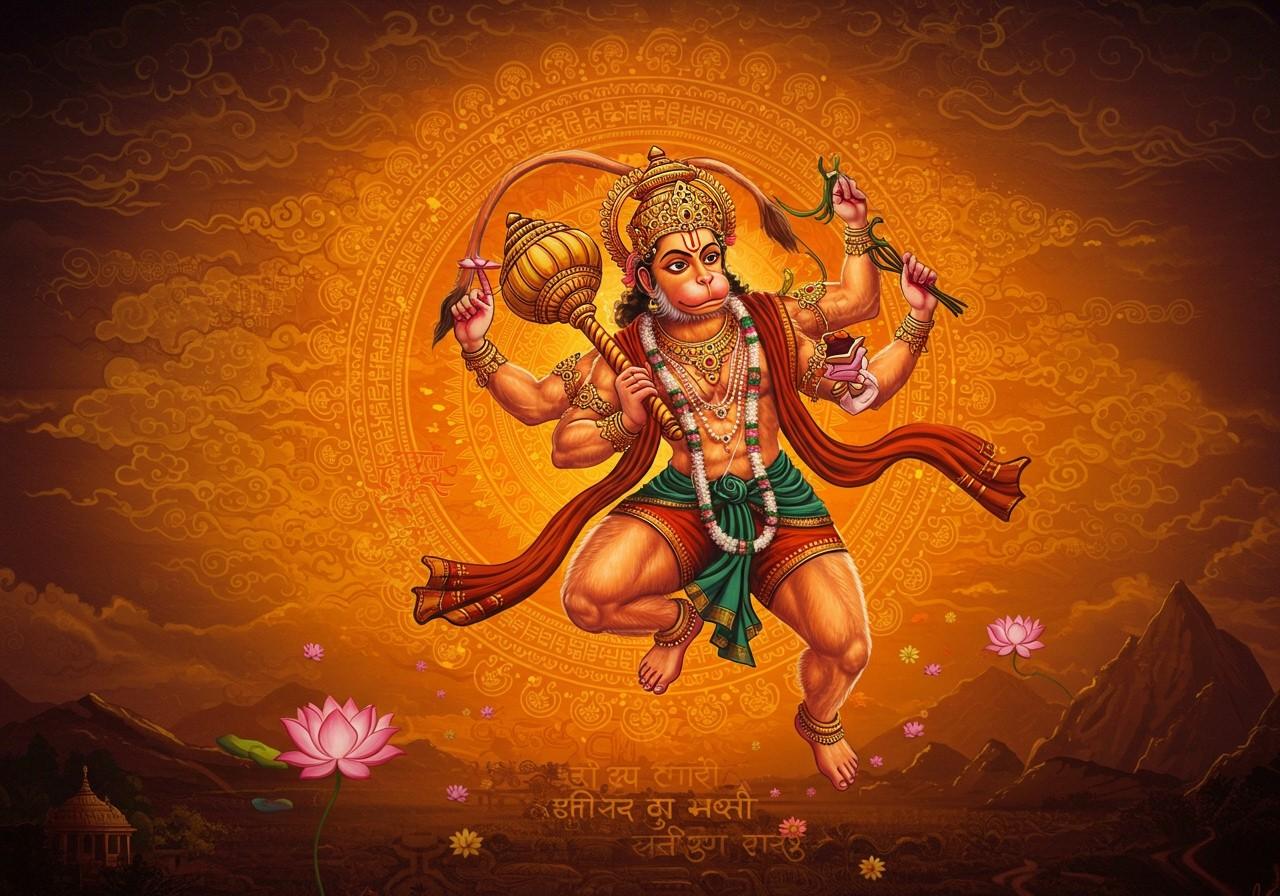
Among the many revered figures in the spiritual traditions of
India, few have influenced the lives of people as deeply and widely as Hanuman.
Known for his immense strength, unwavering devotion, humility, and courage,
Hanuman occupies a special place in the hearts of millions of devotees. His
character, primarily described in the ancient epic Ramayana, has transcended
mythology and become a powerful source of inspiration, faith, and resilience
for people across generations.
At the core of Hanuman’s influence is his unparalleled devotion
to Lord Rama. In the Ramayana, Hanuman is not portrayed merely as a warrior or
a divine being but as the embodiment of selfless service and loyalty. His
dedication to Rama represents the ideal relationship between a devotee and the
divine. For millions of believers, this devotion teaches an important lesson:
true strength lies not only in physical power but in humility, faith, and commitment
to righteousness.
One of the most significant ways Hanuman has impacted people’s
lives is through the sense of courage and protection associated with him.
Across India and many parts of the world, devotees chant the famous hymn
Hanuman Chalisa, composed by the poet-saint Tulsidas. Reciting the Hanuman
Chalisa is believed to bring strength, remove fear, and protect individuals
from negative influences. For many people facing hardships, illness, or
uncertainty, this prayer becomes a source of emotional and spiritual support.
Hanuman also symbolizes boundless energy and determination. One
of the most famous episodes from the Ramayana describes how he leaped across
the ocean to reach Lanka in search of Sita, the wife of Lord Rama. This act
represents the limitless potential hidden within individuals. Devotees often
interpret Hanuman’s story as a reminder that with faith and dedication, even
the most impossible challenges can be overcome.
Another powerful aspect of Hanuman’s impact is his role as a
moral guide. His character teaches virtues such as discipline, loyalty,
humility, and service. Unlike many powerful figures in mythology, Hanuman never
seeks glory for himself. Instead, he attributes all his achievements to Lord
Rama. This humility has inspired millions of people to lead lives focused on
service rather than ego.
In Indian society, Hanuman’s influence extends beyond religious
practice into daily life and culture. His temples can be found in nearly every
town and city, where devotees gather especially on Tuesdays and Saturdays to
seek blessings. For many individuals, visiting Hanuman temples before important
tasks—such as exams, journeys, or new ventures—provides psychological
reassurance and confidence.
Hanuman has also become a symbol of physical and mental
strength. In many traditional Indian wrestling schools, known as akharas,
Hanuman is worshipped as the patron deity of strength and discipline. Wrestlers
and athletes often draw inspiration from his extraordinary power and endurance.
His image reminds them that strength must be guided by self-control and noble
purpose.
Beyond religion, Hanuman’s story carries universal messages that
resonate with people of all backgrounds. His life represents the triumph of
devotion over ego, courage over fear, and service over selfishness. In times of
crisis or uncertainty, many individuals look to Hanuman as a symbol of hope and
perseverance.
The influence of Hanuman has also spread far beyond India.
Through literature, television adaptations, and cultural traditions among the
Indian diaspora, his stories continue to inspire people worldwide. Whether as a
divine protector, a symbol of devotion, or a model of strength, Hanuman’s
character remains deeply embedded in the spiritual and cultural consciousness
of millions.
Perhaps the greatest impact Hanuman has had is the inspiration
he gives people to believe in their inner power. In the Ramayana, Hanuman
initially forgets his own strength until others remind him of it. This episode
is often interpreted as a metaphor for human life: many individuals possess
great potential but fail to recognize it. Hanuman’s story encourages people to
rediscover their abilities and use them for good.
In conclusion, Hanuman’s influence extends far beyond mythology.
Through devotion, courage, humility, and service, he has shaped the spiritual
outlook of millions of people. His story continues to remind humanity that true
strength lies in faith, compassion, and dedication to a higher purpose. For
countless devotees, Hanuman is not just a figure from an ancient epic but a
living source of inspiration guiding their lives even today.