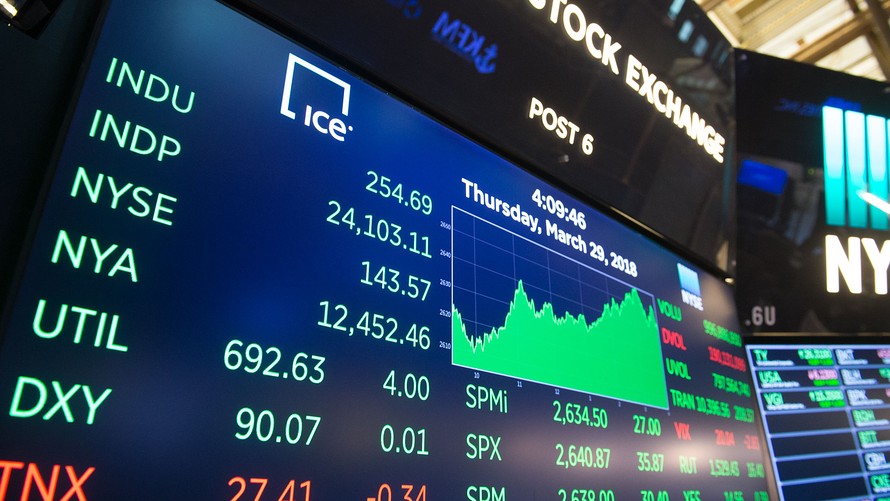
In the intricate world
of financial markets, predicting stock movements is akin to finding a path
through a labyrinth. Investors and analysts have long sought tools that can
decipher market patterns and forecast future prices with precision. Enter
machine learning (ML), a subset of artificial intelligence that has
revolutionized stock market predictions.
The Convergence of
Finance and Technology:
Machine learning
algorithms thrive on data, and the stock market is a treasure trove of
information. By analyzing vast datasets, ML models can identify complex
patterns that are imperceptible to the human eye. These patterns include
historical prices, trading volumes, and even sentiment analysis from news
articles and financial reports.
The ML Arsenal: Models
and Algorithms:
Several ML models are
at the forefront of stock market predictions. Regression algorithms predict
continuous outcomes, making them suitable for forecasting stock prices.
Classification algorithms, on the other hand, are used to predict discrete
outcomes, such as whether a stock price will go up or down.
Among the most
sophisticated tools are neural networks, particularly Long Short-Term Memory
(LSTM) networks. LSTMs are designed to remember long-term dependencies, making
them ideal for time-series data like stock prices. They can capture the
temporal sequence of events, which is crucial in understanding market dynamics.
Challenges and
Considerations:
Despite the potential
of ML in stock market prediction, there are challenges. The market is
influenced by myriad factors, including economic indicators, political events,
and trader psychology. Moreover, the market is inherently noisy and volatile,
making it difficult for models to predict sudden shifts accurately.
To mitigate these
challenges, data preprocessing is critical. It involves cleaning and
normalizing data, handling missing values, and selecting relevant features.
Additionally, models must be trained and tested rigorously to avoid
overfitting, where a model performs well on training data but poorly on unseen
data.
Ethical and Practical
Implications:
As ML models become
more prevalent in stock market prediction, ethical considerations arise.
There’s a fine line between legitimate analysis and market manipulation.
Regulators and practitioners must ensure that these powerful tools are used
responsibly.
Furthermore, while ML
can enhance decision-making, it cannot replace human judgment. Traders and
investors must understand the limitations of ML predictions and use them as one
of many tools in their arsenal.
The Future of Stock
Market Prediction:
The future of stock
market prediction with ML is promising. As computational power increases and
more data become available, models will become more accurate and sophisticated.
This evolution will empower investors to make more informed decisions,
potentially leading to more stable and efficient markets.
In conclusion, machine
learning offers a new lens through which we can view and predict the stock
market. While it’s not a crystal ball, it provides valuable insights that, when
combined with human expertise, can lead to better investment strategies.
This article provides a
high-level overview of how machine learning is applied to stock market
predictions, highlighting the potential benefits and challenges without delving
into technical complexities. It’s crafted to be informative and engaging for
readers interested in