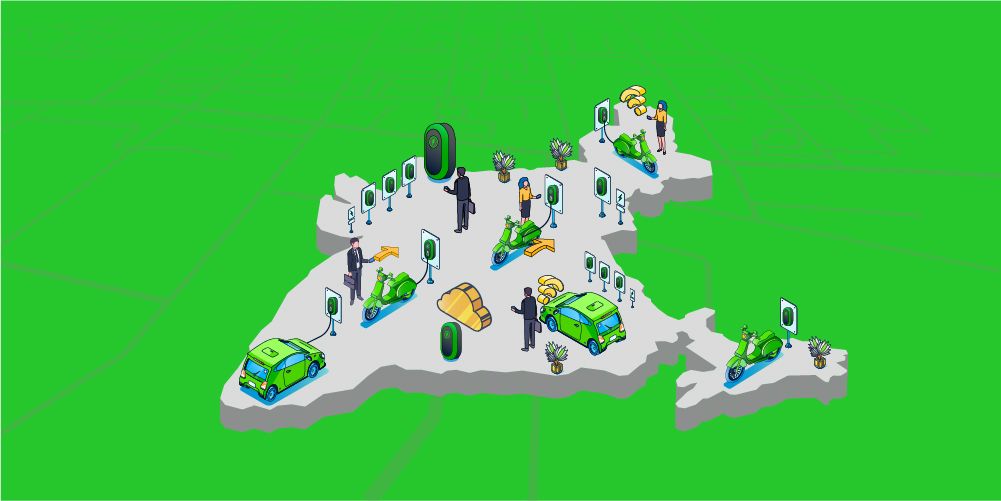
The future of electric vehicles
(EVs) in India is promising, driven by a combination of policy support, market
demand, and technological advancements. Here are some key factors shaping the
EV landscape in India:
1.
Government Policies and Incentives
2.
Market Growth and Demand
3.
Battery Technology and Manufacturing
4.
Charging Infrastructure Development
5.
Environmental Benefits and Net-Zero Goals
6.
Adoption Challenges
Despite the optimism, there are
challenges:
7.
Future Outlook
By 2025, electric vehicle sales could comprise up to 20% of new car sales. By 2030, electric vehicle sales could reach 40% of new car sales. By 2040, electric vehicle sales could account for nearly all new car sales.
The future of electric vehicles in India holds great promise
and is poised for significant growth in the coming years. With supportive
government policies, increasing consumer awareness, and advancements in EV
technology, the country is well-positioned to embrace this shift toward
sustainable transportation.
The increasing demand for EVs is also leading to an expansion
of charging infrastructure and the development of locally produced battery
technologies. The automotive industry in India is also poised to play a major
role in the global shift towards EVs, with the country having the potential to
become a leader in this space.
Private companies play a critical role in offering smart
digital solutions that will contribute to infrastructure development while
acting as a bridge between government agencies and end-users. Initiatives
from these companies will help fleet operators make the shift to EVs and OEMs
to provide seamless driving experiences to their customers.
Collaboration with local governments will also help expedite
the construction of charging stations, along with creating greater awareness
among Indian customers. This will contribute to the rapid growth of the EV
industry.
It is therefore up to both the public and private sectors to
continue working together to make India's ambitious goals a reality. The right
combination of innovation and investment has the potential to accelerate the
adoption of electric vehicles in India, transforming the country's
transportation landscape and contributing to a cleaner, greener future.
Conclusion
The EV market in India is poised for
exponential growth, supported by strong government policies, increasing private
sector participation, and rising environmental awareness. With proper
infrastructure, investment, and innovation, India could become a global hub for
EV manufacturing and adoption in the coming decade.