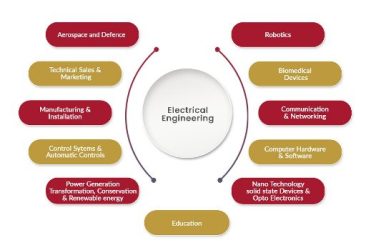
Electrical
engineering is poised for a bright and expansive future, driven by swift
technological progress. The rising need for effective energy solutions,
automation, and intelligent systems guarantees ongoing development and
innovation within the discipline. Electrical engineering is one of the core
engineering fields with vast career opportunities and evolving prospects. The
following sections outline significant areas that underscore the future
potential and scope of electrical engineering.
1. Future
of Electrical Engineering
1.1 Renewable Energy & Sustainable Power
Solutions
- Growing demand for solar, wind, hydro,
and geothermal energy.
- Advancements in energy storage
technologies, such as solid-state and lithium-air batteries.
- Smart grids
for real-time power distribution and load balancing.
- Development of hydrogen fuel cells
as alternative energy sources.
1.2 Electric Vehicles (EVs) & Smart
Transportation
- Expansion of EV charging
infrastructure (fast, wireless, and smart charging).
- Vehicle-to-grid (V2G)
integration for energy optimization.
- Electric aircraft and hyper
loop developments.
- Battery and motor efficiency
improvements for sustainable mobility.
1.3 Artificial Intelligence (AI) &
Automation in Electrical Systems
- AI-driven predictive maintenance
for power grids and industrial plants.
- Smart IoT-based home
automation and energy management systems.
- Machine learning-based
optimization of electrical networks.
- AI-assisted circuit and
semiconductor design.
1.4 Power Electronics & Semiconductor
Innovations
- Use of GaN (Gallium Nitride)
and SiC (Silicon Carbide) transistors for energy-efficient
devices.
- Development of high-voltage direct
current (HVDC) transmission.
- Innovations in miniaturized and
highly efficient power converters.
- Flexible and wearable
electronics powered by advanced circuits.
1.5 5G & 6G Communication Technologies
- 5G deployment
enabling faster and low-latency communication.
- Research into 6G
for ultra-high-speed data transmission.
- Advanced antenna design
for better wireless communication.
- IoT-driven smart city
applications using 5G networks.
1.6 Quantum Computing & Advanced Sensors
- Quantum computers revolutionizing
electrical circuit simulations.
- Quantum sensors
for precise electrical and power measurements.
- Superconducting materials
for lossless power transmission.
- AI-enhanced cyber security
for electrical and power networks.
2. Scope
of Electrical Engineering
2.1 Career Opportunities in Electrical
Engineering
Electrical
engineers have opportunities in various industries such as power, automation,
electronics, communication, and emerging technologies.
Core
Electrical Fields
- Power Generation &
Distribution
(Thermal,
Hydro, Nuclear, and Renewable Energy Plants)
- Smart Grid & Electrical
Infrastructure Development
- Electrical Machines &
Drives
(Motors,
Transformers, Generators)
Emerging
Fields
- Electric Vehicles (EVs)
& Battery Technology
- IoT & AI in Electrical
Systems
- Renewable Energy Systems
& Energy Storage
- Power Electronics &
Embedded Systems
- 5G & Wireless Communication
Engineering
Industries
Hiring Electrical Engineers
- Energy & Power Companies (Siemens,
GE, ABB, Schneider Electric)
- Automobile & EV
Companies
(Tesla,
Rivian, BYD, Tata Motors)
- Telecom & IT
(Ericsson, Qualcomm, Nokia, Intel)
- Consumer Electronics
(Apple, Samsung, Sony, LG)
- Government & Public
Sector Units (PSUs) (NASA, ISRO, DRDO, Railways)
3. Higher Education & Research Opportunities
- Master’s & PhD in
Electrical Engineering, Power Systems, AI in Electrical Systems
- Research in smart grids, nanotechnology,
robotics, and superconductors
- Collaboration with space
agencies & research institutes (NASA,
CERN, IEEE)