In
a world where the health of our planet is becoming an increasingly pressing
concern, the field of environmental economics stands at the forefront of
addressing these challenges. Environmental economics is not just about dollars
and cents; it's about understanding how economic decisions impact the
environment and finding solutions that balance ecological sustainability with
human well-being.
Understanding Environmental Economics
At
its core, environmental economics seeks to integrate economic principles with
environmental science to inform policy decisions and resource management. It
examines the ways in which human activities affect the natural world and
explores the economic incentives and mechanisms that can promote environmental
conservation and sustainable development.
The Value of Nature
One
of the fundamental concepts in environmental economics is the idea of valuing
nature. While some aspects of nature, such as clean air and water, may seem
priceless, they do have economic value. Environmental economists use various
valuation techniques to estimate the economic worth of ecosystem services,
biodiversity, and natural resources, helping policymakers make informed
decisions about resource allocation and conservation efforts.
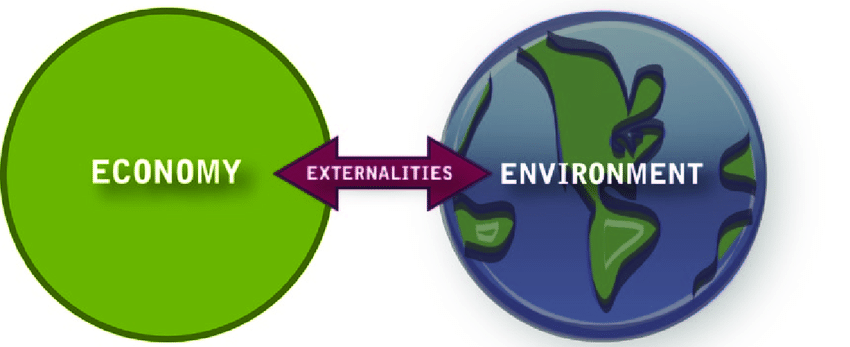
Market Failures and Externalities
Environmental
economics also delves into the concept of market failures, where the free
market system fails to allocate resources efficiently. Externalities, such as
pollution and habitat destruction, are prime examples of market failures that
have negative impacts on the environment. By internalizing external costs
through mechanisms like pollution taxes or cap-and-trade systems, environmental
economists aim to correct these market failures and incentivize environmentally
friendly behavior.
Sustainable Development
Sustainable
development lies at the heart of environmental economics. It involves meeting
the needs of the present generation without compromising the ability of future
generations to meet their own needs. Environmental economists study ways to
reconcile economic growth with environmental protection, promoting strategies
that foster long-term sustainability and resilience.
Policy Interventions
Environmental
economics provides valuable insights into the design and implementation of
environmental policies. From emissions trading schemes to conservation
incentives, policymakers rely on economic principles to craft effective
strategies for addressing environmental challenges. By aligning incentives with
environmental goals, these policies encourage individuals, businesses, and
governments to adopt more sustainable practices.
Conclusion
As
we confront complex environmental issues such as climate change, biodiversity
loss, and resource depletion, the importance of environmental economics cannot
be overstated. By integrating economic analysis with ecological considerations,
environmental economics offers a powerful framework for understanding the
interplay between human activity and the natural world. By promoting
sustainable solutions that balance economic prosperity with environmental
protection, environmental economics paves the way for a
more harmonious relationship between humanity and the planet we call home.
References:
1.
Hanley, N., Shogren, J. F.,
& White, B. (2013). Introduction to environmental economics. Oxford
University Press.
2.
Field, B. C., Field, M. K.,
& Field, M. K. (2017). Environmental economics: An introduction.
McGraw-Hill Education.
3.
Tietenberg, T., & Lewis, L.
(2018). Environmental and natural resource economics. Routledge.
4.
Pearce, D., & Turner, R. K.
(1990). Economics of natural resources and the environment. JHU Press.