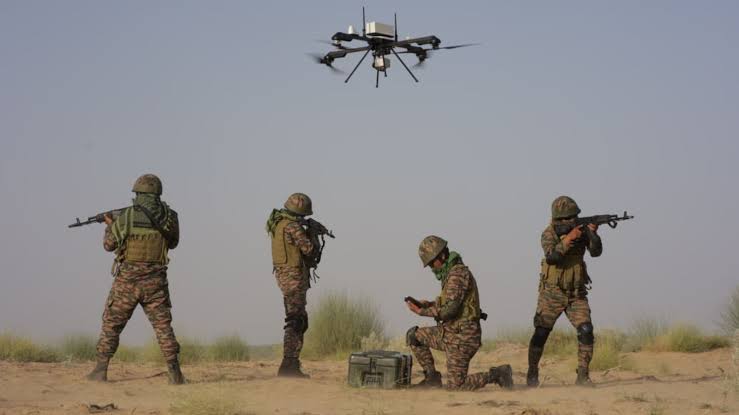
Introduction
Drone
warfare is gradually becoming a significant component of India’s defense
strategy. With rapid technological advancements and increasing security
challenges, India has begun integrating unmanned aerial vehicles (UAVs) into
its military and surveillance operations. While drones enhance national
security and operational efficiency, their use also raises important ethical
and legal concerns that must be carefully examined.
Growth
of Drone Usage in India
India
has significantly expanded its drone capabilities in recent years, particularly
for border surveillance and counter-terrorism operations. Sensitive regions
such as Jammu & Kashmir and the India-Pakistan border have witnessed
increased deployment of drones for monitoring infiltration and illegal
activities. Indian defense forces are also investing in indigenous drone development
under initiatives like “Make in India,” reducing reliance on foreign
technology.
Advantages
in the Indian Context
Drones
provide India with several strategic advantages. They allow real-time
surveillance in difficult terrains such as mountainous borders and dense
forests. This reduces the risk faced by soldiers and improves response time to
potential threats. Additionally, drones are cost-effective compared to
traditional military equipment and can be deployed quickly in emergency
situations.
Ethical
Concerns in India
Despite
their benefits, drone usage in India raises multiple ethical issues. One major
concern is the potential violation of privacy. Surveillance drones used in
civilian areas may infringe on individual rights if not properly regulated. In
a democratic country like India, maintaining a balance between security and
personal freedom is crucial.
Another
concern is the possibility of civilian harm during counter-terrorism
operations. Although India primarily uses drones for surveillance rather than
targeted strikes, any future expansion into offensive drone use could lead to
ethical dilemmas similar to those faced globally. Questions of accountability
arise—who is responsible if a drone operation results in unintended damage?
Legal
and Policy Challenges
India
is still developing comprehensive policies to regulate drone usage. While the
government has introduced drone rules to manage civilian and commercial drone
operations, military applications remain less transparent. The absence of
clearly defined legal frameworks for drone warfare can create ambiguity
regarding their ethical use.
International
humanitarian principles, such as minimizing harm to civilians, must guide
India’s drone policies. Establishing strict rules of engagement and oversight mechanisms
is essential to ensure responsible deployment.
Future
Considerations
As
India continues to modernize its defense forces, drones will likely play an
even larger role. The challenge lies in adopting this technology responsibly.
Policymakers must focus on creating transparent regulations, ensuring
accountability, and protecting citizens’ rights while maintaining national
security.
Conclusion
Drone
warfare offers India a powerful tool to strengthen its defense and surveillance
capabilities. However, its ethical implications cannot be overlooked. A
balanced approach that combines technological advancement with strong ethical
guidelines will be essential for India to use drone technology responsibly and
effectively in the future.