India’s agricultural growth, irrigation, drinking water depends on its rivers. Indian River system is distributed in whole country.
Indian River Systems | ||
River System | Total length | Length in India |
Indus River System | 3180 km | 1114 km |
Brahmaputra River System | 2900 km | 916 km |
Ganga River System | 2510 km | 2510 km |
Yamuna river System | 1376 km | 1376 km |
Narmada River System | 1312 km | 1312 km |
Tapi River System | 724 km | 724 km |
Godavari River System | 1465 km | 1465 km |
Krishna River System | 1400 km | 1400 km |
Cauvery River System | 805 km | 805 km |
Mahanadi River System | 851 km | 851 km |
River streams depend on melting of snow or rainfall. North Indian rives like Ganga, Brahmaputra, Indus and their tributaries get water from melting of snow or even rainfall on mountains and hills. They irrigate a huge area from Kashmir, Punjab, Himachal Pradesh, Rajasthan, Haryana, Uttar Pradesh, Uttrakhand, Bihar to West Bengal and Assam etc.
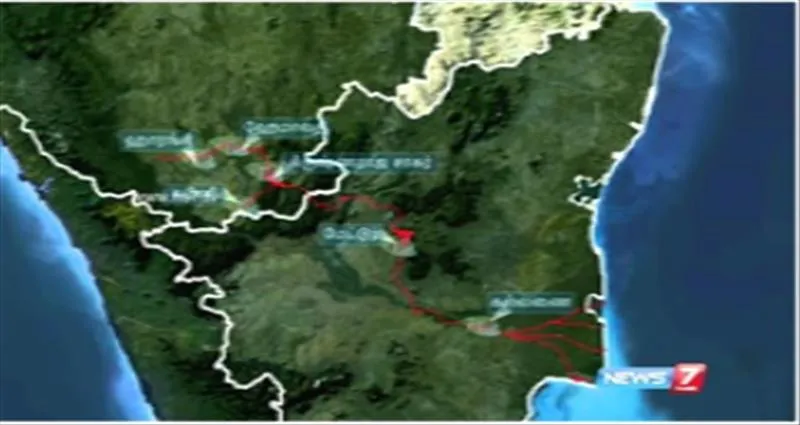
This is the case study of “Cauvery”, a prominent South Indian River.It emerges from the Hill of Brahmagiri, located in the Western Ghats of Karnataka State, its flows towards the south-east direction for 765 km through Karnataka to Tamil Nadu and falls in Eastern Ghats.(Britannica, 2020).


Cauvery Water Dispute
This dispute started in 1892,and in 1924 a treaty was signed between the state of Mysore and the Madras Presidency. In 1990, Cauvery Water Dispute Tribunal was set up. In 2007, the tribunal declared its final verdict, in which it said that Tamil Nadu should receive 419 tmcft (thousand million cubic feet) of water, more than double the amount mentioned in the interim order of 1991. In August 2016, Tamil Nadu government said that there was a deficit of 50.0052 tmcft of water released from Karnataka. The Karnataka government said it wouldn't be able to release any more Cauvery water due to a low rainfall. Tamil Nadu then sought Supreme Court's intervention. On Sept 5, 2017 the SC ordered Karnataka government to release 15,000 cusecs of water a day for 10 days, to Tamil Nadu. This led to widespread protests and bandhs in Karnataka. After several modifications of the order, as Oct 18, the Karnataka government was directed by the Supreme Court to release 2,000 cusecs of water per day to Tamil Nadu till further orders. (TOI)
The Supreme Court on February 16, 2018 gave its final verdict saying that Karnataka will get additional 14.75 TMC of the river water and Tamil Nadu will get 177.25 instead of 192 TMC water. The court considered the water scarcity in Bengaluru while delivering the final judgment and also said no deviance will be tolerated from any state to this order.(Times of India)
A Cauvery Calling:
“A Cauvery Calling “is an initiative to give life to a river which is almost dry, as per the Hindu mythology the existence of this river is dated from the time of Ramayana. Due to political intervention and conflict between states, it is drying, additionally due to deforestation, along the river basin which is one of the main reasons of its drying out.

The river has been depleted 40% in last 70 years, 87% of trees have been cut , due to which the rainfall in this region was scarce or sometimes there were heavy floods.Approximately 47190 farmers committed suicide in the last 15 years due to heavy debt.(www.ishaoutreach.org)
The target of this mission is to plant 242 cr trees along the Cauvery basin though agroforestry. Shri Sathguru started this campaign, now government also supports this cause.
Model is simple just donate Rs 42/-tree. The tree is Sandal wood and other valuation trees. Foundation Isha Outreach, motivates the farmers to grow these trees along with their other crops. When they are fully grown then the government would pay the value of wood to the farmers. Therefore, it is a win- win situation. Farmers get monetary value along with water, which keeps the moisture in river. This brings the rain and it is a continuous process.
Conclusion:
Man can save himself if he comes forward to save the nature. This type of model can be adopted in other parts of the country; it helps us in drought as well as reduces soil erosion during flood. We can bring the atmospheric temperature down too through adoption of such methods.