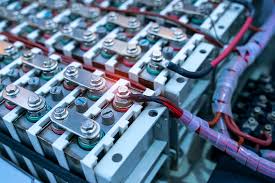
Modern electrical engineering has led to significant improvements in battery technology, particularly in the following areas:
1. Lithium-Ion (Li-Ion) Batteries
Li-ion batteries are widely used in consumer electronics, electric vehicles (EVs), and energy storage systems due to their high energy density, long cycle life, and relatively low weight. Advances in solid state electrolytes and silicon anodes are further increasing their efficiency.
By using a solid electrolyte instead of the more common liquid electrolyte, solid state batteries reduce the risk of thermal runaway and improve safety. These batteries' higher energy density and longer lifespans make them a potential replacement for EVs and portable devices.
Hydrogen and oxygen react chemically to produce energy in hydrogen fuel cells, which aren't exactly batteries. Because of their great efficiency and zero emissions, they are being utilized more and more in backup power systems and electric vehicles.
• Consumer electronics: For
portability and durability, wearable technology, laptops, and smartphones
depend on cutting-edge battery solutions.
• Electric Vehicles (EVs): To lessen
reliance on fossil fuels, the automobile industry is moving toward
battery-powered EVs.
• Renewable Energy Storage: Batteries
provide a steady and dependable power source by storing energy produced by
solar and wind power.
• Medical Devices: Effective battery
systems are used by pacemakers, hearing aids, and portable medical devices to
run continuously.
• Grid Storage Solutions: By balancing
supply and demand in power grids, large-scale batteries enhance energy
resilience.
Battery technology in
electrical engineering has a bright future thanks to current research that
focuses on:
• Faster Charging
Technologies: Improvements in battery composition and charging algorithms are
intended to drastically cut down on charging times.
• Greater Energy Density:To increase the runtime of gadgets and automobiles, researchers are creating
next-generation batteries with larger capacity.
• Sustainability and
Recyclability:Efforts are underway to create batteries that are less reliant
on finite resources and are more ecologically friendly.
• Wireless Charging Innovations: Battery accessibility and convenience are being enhanced by wireless energy transfer technology.