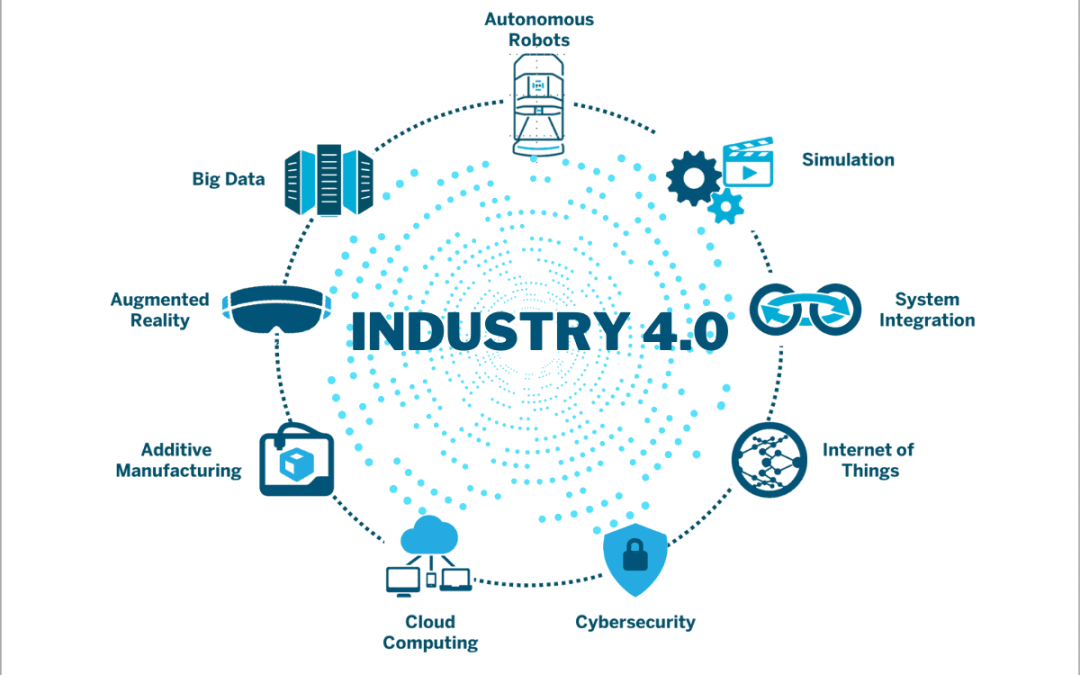
Industry 4.0, also known as
the Fourth Industrial Revolution,
and it is the transformation of conventional l manufacturing and industrial
practices via integration of new ,modern and smart
technologies, automation,
data analytics, as well as interconnectivity. Normally industry
works and posses the input given to it by processing & converting into the output through
machineries . But when machineries get the input data in digital form .It can
restored , analyzed , manipulated as
well as corrected then it makes the machineries in advanced form and AI proof .Industry
4.o is basically an advanced version of industrial working culture which
increases its effectiveness and efficiency. indirectly it ensures the
completion of job in right time with utmost accuracy and precision. All of the work can be
monitored & controlled which makes
it smooth and easy. It also record the data and input which can used for
machines learning and thus machine performance can be studied and Analyzed and
further necessary actions can be taken
regarding maintenance, troubleshooting or shut down. It Enables automation and
self-correction in real time it also Identifies the patterns to optimize
operations, reduce downtime, improve quality. Thus it indirectly reduces the
fatigues of humans as well as machines.
It
focuses on automation, through technologies like:
It
makes a revolution in Industrial sector which ultimately promotes the industrial works in a broader way
where digital and physical systems are combined to create intelligent networks that can monitor,
collect, analyze, interpret and make decisions with minimal human intervention.
For example :
It
is called Industry 4.0 because
it follows three earlier industrial revolutions which are as follows:
Benefits of Industry 4.o
·
It improves the productivity & efficiency.
·
It makes Decision-making
becomes faster.
·
It Enhance the customization
and flexibility.
·
It makes costs and downtime reduced.
·
It help in making Resource
utilization becomes better.
Limitations of Industry 4.o
Example Applications
·
Predictive maintenance of pumps or
turbines
·
Real-time monitoring of boiler parameters
via IoT.
·
AI-based energy optimization in industrial
plants.
·
Digital twin simulation of mechanical
systems.
Key Features
·
Real-time Data
Exchange
between machines and systems simultaneously..
·
IoT (Internet of
Things)
enables smart devices to communicate with other devices.
·
Artificial
Intelligence (AI) for intelligent decision-making in system.
·
Cloud Computing for
flexible and scalable data access and storage.
·
Cyber-Physical
Systems
that blend digital control with physical processes.
Thus an Industry 4.0 is reshaping the future of industries by connecting machines, systems ,controls and humans in a smart, data-driven environment which indirectly makes the word technically sound .